First of all, I used to root for Armin and Levi's choice after watching the "Midnight Sun" episode. However, after perusing it closely, I concluded that Levi's choice is utter bullshit. More importantly, as a reader, I have the right to judge any author's work. Authors aren't immune to criticism. "Even if there is a god and I had his teachings before me, I would think it through and decide if that was right or wrong myself." ~Near
FROM THE STORY STANDPOINT
1/ LEVI'S DECISION ISN'T IN THE INTEREST OF HUMANITY.
Levi himself knows that.
"No regrets" applies to situations in which you truly can't gauge the outcomes of your decisions. In Levi's case, he knew full well that all the people currently alive could die due to this. He didn’t think about the soldiers' deaths being in vain. By making this decision, he's also asking other people to bear the consequences. His choice was not made in ignorance but deliberation. Therefore "no regrets" doesn't apply here. You can't make a knowingly stupid decision and rationalize it by "no regrets!" I know the show was trying to present this "impossible" choice to save Armin or Erwin but to me, it was a no-brainer. Armin is an intelligent boy who has the potential to become as good as Erwin in ~20-30 years. Erwin is already as good as he is. So why take the gamble?
Levi has followed Erwin for years. It should take a lot more than a few seconds for him to change his mind and place humanity in the hands of another person, not to mention, a kid!
2/ LEVI'S DECISION ISN'T IN ERWIN'S INTEREST, EITHER.
Levi's reasoning was that he wanted Erwin to "rest" so that he wouldn't bear the burden of sending soldiers to death. So according to Levi, people should die to escape a moral conundrum rather than face it and surpass it.
Imagine working hard all your life for this one dream, then, when it's right there in front of his eyes, Levi pulled the rug from under his feet. That isn't love or respect (like some people have argued). Erwin did not owe his will to stay alive entirely on a single childhood dream. He obviously wasn't ready to die because he needed someone to give him a nudge, and his first reaction when Levi told him to suicide-charge was a mix of surprise and sadness.
"Erwin handing the serum to Levi" isn't a reason to justify Levi's choice. The serum was entrusted to Levi based on the logic that he's "humanity's strongest" who has the greatest chance of survival. Erwin is not the kind of person who would say, "Save the serum for me". That doesn't mean Levi made the right choice. Even if he truly believed that Erwin would feel "too guilty to move on after he's seen the basement", "can't live with himself" blah blah..., what he would do in the future is not for Levi to decide. IRL, being a surrogate decision-maker doesn't give you the power to do whatever the hell you want. If there are reasons to suspect that the proxy is not acting in a person's best interest, or having ulterior motive, a court or an ethics committee will take over. In addition, the decision to euthanize a person IRL is always in the context of futile treatment outcomes. In other words, if there were an elixir (like the Titan serum) that could heal all damages on a person, the euthanization discussion would never be on the table.
Had Erwin not wanted the serum to be used on himself, he would've told Levi "don't give it to me" way back before battle.
If Erwin were to choose, he wouldn't put humanity in the hands of a newbie soldier.
This is what Isayama intended in the "serum bowl" (source):
"During that moment, I illustrated the panels while thinking, 'Everyone is a slave to something', Isayama shared. Perhaps Erwin was enslaved by his 'dream.' And as long as he lives, he cannot find freedom from it - only in death is there liberation. For Erwin, Levi abandoning his rescue is also using death to release Erwin from his shackles."
"From Levi’s perspective, the Kenny who always survived by being selfish actually did something selfless in his final moments - that shocked him immensely. Because of that experience, Levi didn’t revive Erwin."
So, Isayama intended for Levi to think of Erwin as "being enslaved to his dream" and that he wanted Erwin to die a selfless death like Kenny's.
F* this bullshit. Since when is having a dream/purpose in life synonymous with slavery?! By that definition, everyone is a slave, since everyone has something to care for or to work toward, or someone to protect, or some goal to burden themselves with - either it's for money, family or some sort of ideals. Why is it a bad thing?! Every dream, every endeavor, by definition, carries some sort of burden / requires some sort of sacrifice from the dreamer (eg, if you want good grades, you have to give up part of your social life; if you want to protect your family, you have to give up other things). If something is easily attainable without efforts, it isn't a dream.
Levi did a lot of self-projections on Erwin. He's acting like a person could have only 1 goal in life. It's also not in Erwin's character to wallow in negativities or stop moving forward. Even if he had “no dreams” beyond the basement, given the type of person he is, he would want to find out more about the world and the mysteries of the Titans.
We don't explore for happiness.
We explore for truth.
We all know being a Commander of the SC comes with great burden, but despite that, he staged the coup d'etat partly because he did not actively want to die. He hesitated to choose between his dream and humanity in his final battle for the same reason: if he knew a way to win against the Beast Titan and still live to see the basement, he would definitely choose that route over a suicide charge. He was having extreme difficulty giving up his dream. This is why Levi stepped in and made the call for him, and he gave a faint smile: He is relieved that he did not have to make the choice because someone was able to do it for him. It was resignation, not satisfaction. The look on his face when he made the final speech and charged was pure horror (we had never seen him scared of anything before this moment). He did not "live his final moment in peace" like some people think. He simply realized that humanity's victory was more important than him personally reaching the truth, but he never let go of his desire to know the outside world. This was even reflected in his final words before Levi injected Armin with the serum.
IRL sometimes terminally ill people wish to die for no reason other than the feeling that they are a financial/resource burden. Is GUILT a good reason for euthanasia? Levi is a lifelong sufferer himself. Why doesn't he choose death for himself, then? Ah yes, he must be thinking life is worth living even when it's shit, but when it comes to other people's lives, his hypocrisy shows. If "death is the solution to suffering", Levi should kill the entire Paradis population to end their suffering.
The rock bombardment scene was Erwin's moment of weakness that Levi had to witness. It was Erwin's survivor’s guilt. But we see that a lot of characters go through this moment, too, and come out alive and kicking. People bring up Erwin's words of how sometimes death would be the easier choice, but we also see Armin have this disregard for his own life. Nevertheless, we still see Armin push forward. When they discover that the Titans aren't their real enemy, Eren shifts his gears towards freedom. Reiner - a character that explicitly wanted to die, still sees hope through Gabi and Falco. Shadis is proof that you can turn around after wallowing in failure. If all these characters managed to remold their dreams and visions and overcome their guilt, why can't Erwin?! His whole character wasn't just the basement. He still had people and ideal he cared about. The whole "he needed to be drunk on something" thing is a bogus argument.
3/ ERWIN'S DREAM IS NECESSARY TO MANKIND.
Never deny that Erwin has a selfish dream, but he at the core is driven by a quest for truth and justice - things that never fade away.
A lot of people say that "Erwin only cared about the basement" - this is nonsense. If that were the case, he wouldn't have risked his own life multiple times, and he wouldn't sacrifice himself with his soldiers when he was so close to the damn basement. It's very lazy thinking saying that the only thing Erwin ever cared was the basement, because it even contradicts his last speech and how he cared about his comrades that died along the way.
Erwin's dream is more beneficial to humanity because the very nature of the pursuit for truth pushes humanity forward. He wanted to know the truth of the world because humanity was in a dark deep forest with no knowledge whatsoever and his original motivation was that, when he raised his hand in the classroom, before his father told him anything. Why is there this struggle in the first place? What are they - the living - fighting for? Erwin wants to know. Most of Erwin's characterization embodies the human spirit of inquiry.
When Erwin told the recruits that he was seeking truth in Eren's basement in Season 1, many of them willingly joined him. When he was younger, he spread his theories among his fellow trainee cadets (S3P2 ep3-4 where Nile confirms it). That's one of the reasons that many graduating cadets joined the SC along with him.
Some people argue how Armin's dream "was pure, selfless and somehow better than Erwin's". Armin's dream was selfish, too. He wanted himself and his friends to see the ocean. It's similar to Furlan's and Isabel's dream of seeing the sky for themselves rather than wishing to free all the people of the Underground. When Armin got to the ocean, he enjoyed the scenery and completely "forgot" that his people haven't been freed yet. This panel is kinda symbolic of Armin's character throughout the timeskip, isn't it? Being fascinated by the outside world isn't problematic by itself, but Armin's willful ignorance is worthy of criticism.
Some people argue that Armin is "hopeful/positive" while Erwin is "hopeless/negative". Ok, when you've spent decades of your life trying to reach your goal and haven't succeeded, of course you aren't happy. But the fact that he persisted all those years speaks to his resilience.
If you were presented with a person with hopes and dreams VS. another person who has the ABILITY to make an actual change, whom would you choose? People may criticize Erwin's dream, but his quest for truth is what saves the Wall society from being wiped out by Marley. Make no mistake: It is Erwin's dream, not Armin's, that does.
5/ THE DIFFERENCES BETWEEN ERWIN AND LEVI:
Most people can't relate to Erwin's person or ambition, and Levi is one of them.
Erwin was a person with great vision. And full of curiosity. His character embodies the spirit of human INQUIRY.
Remember that Erwin smiled when he found that Titans came from humans at the end of S2. While Levi was somehow upset and hopeless, Erwin was smiling and insisting that they made a huge step and kept pushing forward. It shows that he'd have a new sense of motivation and satisfaction after finding out the truth. Because any discovery about the world they live in is worth being joyful about. Instead of wallowing in negativity like Levi, he rejoiced in humanity PROGRESS. Feeling sad/guilty for the deaths of comrades is normal. But Erwin knew that all the sacrifices led them to this point. That's how he kept going for decades despite being a subject of hatred and mockery in Paradis. However, the political landscape is different after the coup: he and the SC are the people's heroes now. When he stood on the Wall and having the people cheer for him for the first time, how did he react? Did he go, "No I'm not worthy, I'm a devil, I don't deserve admiration"? Nope. He returned the people's raucous cheering and applause with an equal amount of positive energy that surprised Levi! Again when he stood on Shiganshina Wall in "mountain of corpses", he reiterated to himself that "these sacrifices were necessary to make it this far". He kept his eyes on the goals and didn't let emotion cloud his rationality. But Levi is unable to relate to him, therefore in his mind he thinks this is a negative thing: He thinks it's not worth it, but Erwin thinks differently. This is a major difference between Erwin and Levi. Levi lacks the vision of Erwin. Therefore, he can't possibly predict what Erwin would do post-basement.
On the other hand, Levi could emotionally relate to Armin because the EMA trio reminds him of Furlan and Isabel.
(1) Erwin's personal goal has never superseded his duty.
(2) What really matters is the RESULTS. Does he yield the best results? Yes.
(3) Everyone in the Survey Corps - including Armin and Levi - has their own personal motives. It is perfectly normal.
(4) Some people think that "Armin is more selfless than Erwin". Ok, how was Armin able to see the ocean? Because of Erwin's achievements. Much of Armin's drive is "to see the ocean". He joined the army in the first place because the government killed his grandfather - which is pretty similar to why Erwin joined the army.
(5) Armin is wearing rose-colored glasses and lacks the resolve of Erwin.
6/ ERWIN SACRIFICED LIVES BC IT'S BETTER THAN THE ALTERNATIVES.
Erwin's actions would have been the same whether his motivations had been selfish or altruistic, and the results of his actions have always been to the benefit of Paradis as a whole.
There is an argument that "Armin can win without sacrificing anyone, unlike Erwin who had to sacrifice others" - which is invalid because the Shiganshina battle was set up in such a way that Armin must not use anyone else because his situation required that the Colossal Titan be isolated from any threats. Meanwhile, Erwin was put in a situation in which the only way out is to charge as a unit. He could've lost and left the fate of the Wall to Marley, but he pushed back and retook Wall Maria.
Erwin is someone who truly understands what must be done in order to achieve a certain goal.
When they have to fight giant monsters with nothing but 3D gears and swords, every mission is a suicide mission, regardless of the Commanders. They are at a major information and technology disadvantage compared to their enemies. And that is the hand that Erwin has been dealt with because of the awful world he lives in. It was Erwin who did the dirty work and that's why everybody else's hands were clean. Nontheless, he still has the reputation of having the most minimal lives lost in the history of leaders.
7/ ERWIN's MOTIVATIONS:
Erwin is inquisitive in nature; he looks beyond the Wall - that's why he asked that question in the classroom in the first place. As shown in S3 ep3, teenage Erwin was under the impression that his father's death was justified as long as the government had a good reason... which means that he didn't figure out the real cause of his father's death until he joined the military, which means that his original motivation to join the Survey Corps wasn't his father's death, but the pursuit of truth.
"One day, we'll break it down. This wall hiding the truth... will fall." ~ Erwin at the end of Season 2
When Erwin’s gamble paid off in the Coup and it’s proven that the government cared nothing for humanity, he reacted not with triumph but with sorrow. Rather than thinking of himself, he worried about the future of mankind: He told Nile that they were on a more dangerous path than ever before.
The only time when Erwin's personal goal became a barrier to humanity's victory is in the battle of Shiganshina, where he quickly discarded his dream for humanity. "The moment humans reveal their truest nature is when they are in the brink of death". At the brink of death, Erwin chooses humanity. Actions speak louder than words. Erwin didn't understand that his motive isn't entirely selfish: He wanted to free humanity of their government's lies and injustices.
Erwin is not the kind of person who prioritizes his own dream. He follows through with his responsibilities, and when the time comes, Erwin is able to give up on his dream and make the best decision. ~Isayama
8/ ERWIN WOULDN'T QUIT POST-BASEMENT:
An argument that keeps surfacing in the fandom is: "Erwin would lose motivation after he learned what's in the basement". Ok, that's not how goals work. If a person wants to become a millionaire, it doesn't mean he stops working after he has $1 million in his account. No, he'll strive for more. Erwin had been fighting before he even knew about the basement or Eren, and it’s unreasonable to assume he would just stop fighting if he learned the truth.
People need to understand that motivations are deeper than goals. I don't think Erwin would be mad at all to get to see the basement if he was chosen.A person who spent his life to find out more about the world wouldn't stop after finding out that there's so much more to his dream and the world than he ever realized. A person who hoped to win the lottery wouldn't be depressed after winning it.
Recall when Levi asked what Erwin would do afterward, he answered, "Eliminating threats. Apparently someone outside the Wall wants us all dead. The truth that we'll find at the basement will reveal who that someone is". It was he who posed the question of "Who is the real enemy?" in the first place. A man all about eliminating threats isn't going to just stop after finding out the identity of the threat.
Isayama chose Armin to survive because Erwin would've made the story hard to write since it would've been out of character for Erwin to step aside and let chaos happen.
To those who argue that "Erwin can't go on": Imagine if you were in AOT world in Season 4, whose leadership would you follow - assuming they were alive: Hange? Levi? Eren? Armin? Pixis? Shadis? If you would rather follow Erwin than anyone else, then you know that he CAN go on.
From an interview with Isayama:
Journalist: "If humanity is fully released from the Titans’ terror some day, and there are no more battles left to fight, what would you want to do?" Erwin: "Ha... even after exterminating the Titans, the rule of humanity comes next, right? . . . Yes. The realization of our own dreams is less important than building a world for people, a place where humans can accomplish their own dreams."
It isn't in his nature to simply be "done" with his life. He'd come up with a new dream, see the bigger picture at hand and decide what needs to be done and how to go about it.
Both Eren and Armin are disappointed after achieving the dream they had as kids. That is because they both expected the outside world to be a happy, dreamy place. Reality is not. This is in contrast to Erwin who just wanted to know the truth for what it is. He would go about it in a realistic way.
Erwin would make sure the sacrifices made were not in vain by leading Paradis to victory. Not to mention that the Survey Corps now has gained the populace support, it would be a lot easier on him. His strong sense of responsibility wouldn't allow him to abandon the people when they need his leadership. Also, he would be very curious about how Titans first came into existence, like his father was going to seek the truth about them.
9/ ERWIN IS THE FORCE THAT UNITES PARADIS.
Surely Armin has the potential but there's no other character in the series who can be a leader anywhere close to Erwin's level. His leadership, experience and recent popularity among civilians as a figure of hope and trust are enough to prove that he is the best choice.
Is Armin capable of all of these deductions in S1 and S2? No, it was Erwin who did all of this. Armin was mostly reiterating/narrating the findings that the Survey Corps had found. The series conditioned the viewer to think of him as "a genius" by "showcasing" him that way, while "forgetting" to credit Erwin for his strategic works. People don't get to see Erwin's deductions so they end up mistaking his deductions for Armin's or thinking that he's less smart than Armin [proof].
Battle of Shiganshina: The situation was "damned if you do, damned if you don't", but Erwin was able to turn defeat into victory and managed to get back at the Beast Titan. If you switch the Beast Titan with the Colossal Titan, Erwin would have come up with a way to defeat the Colossal. But if you switch the Colossal with the Beast, Armin wouldn't do the suicide charge; he wouldn't even inspire the recruits to do so.
Armin is smart. But Erwin is the leader humanity needs.
Think about it this way: In terms of intelligence, I could do at least 90% of things that Armin did - with a certain amount of knowledge, good observational skills and curiosity - I think many people can. But I can never hope to be able to cover more than 30% of what Erwin does - very very few people can. Becoming a respectable leader requires a lot more than intelligence. Humanity inside the walls is dealt a serious blow without Erwin's leadership and tactical brilliance.
10/ CHAPTER 136: LEVI CONTRADICTS HIMSELF:
According to Levi, "Dedicate your Heart" means that an idealized world is the only one worth dying and giving up your dreams for. What does this mean? It means that if the world hasn't become an ideal place yet, the Survey Corps' duty isn't over. This means that Erwin's dream (for an ideal world) goes beyond the basement. Four years ago, Levi said that he saved Armin NOT for humanity's sake. He also said that he did not expect Armin to fill Erwin's role, but now he admits that he kinda does. He saved Armin not because Armin is Armin but because he "has the same look in his eyes as Erwin" = he entrusted the future to Armin to carry on the Utopia dream of his comrades. Instead of choosing "that kid who had the same look in his eyes as Erwin", he could've simply chosen Erwin and given the world a better chance.
Conclusion: Philosophical bullshit always destroys itself with irony and contradictions.
FROM THE WRITING STANDPOINT
1/ THE NARRATIVE IS MANIPULATIVE:
Isayama had to find a way to make it seem like both Erwin and Armin are equal in military value. This would mean hyping Armin up as a careful, tactical genius and downplaying Erwin into this cruel Commander that would pointlessly sacrifice his soldiers left and right. It's funny how all of a sudden, Armin was "Humanity's Savior" and Erwin was "the Devil".
And that whole "drunk on dreams" thing only made it seem like Erwin was just gonna give up everything once he reached the basement. As if he didn't say that the living should continue to keep on fighting no matter what, in honor of their dead comrades' sacrifices, and that even if the truth was harsh, Erwin himself said that they should not buckle or yield.
The whole Serumbowl fiasco cheapened Erwin's sacrifice and used his final moments as a means to prop up Armin.
That's why I find the narrative dishonest and I lost my respect for Isayama as an author. But because his manipulation was so subtle, many fans don't realize it and keep arguing that "the serumbowl is good writing". It isn't.
2/ THE REAL REASON THE AUTHOR GETS RID OF ERWIN:
If Erwin were alive, he would no doubt become the MC of Season 4, which isn't what the author wanted. What ultimately dooms Erwin is more genre demands than anything else: AOT is shounen, after all, which means the main cast of kids must have the leading role, so it becomes a case of “how to remove competing adults from this role in the narrative”.
3/ THE MANGA PURPOSEFULLY DID NOT SHOW US ERWIN'S THOUGHT PROCESSES
... thereby making a lot of people think that he's "less smart than Armin" while nothing is further from the truth. Again, Evidence.
4/ SEASON 4 WOULD HAVE BEEN MORE EPIC WITH ERWIN.
I never agree with the argument that "this character's arc is complete". According to this "argument", Erwin should be dead cause his arc "concluded" even though he never got to the basement?! And Armin should be alive cause he must know what's beyond the sea???
There's a lot more to explore with Erwin's character. Characters don't need to have a big change or an epiphany for an "arc". They can stay the same damn characters the entire time and still be interesting.
4/ THE "SERUM BOWL" SCENE IS GASLIGHTING:
The "serum bowl" makes for a good bit of drama and feels, but it intellectually angers me because the author gaslights us into rooting for Armin by having multiple characters bat for him and list his accomplishments while completely ignore Erwin's - worse, having Floch argue that Erwin is "the devil". Floch was looking for someone to blame (Erwin) and wanted to him back out of spite, which only reinforced Levi's decision. And it was very foolish of Levi to listen to him, as he did not represent the Survey Corps or the Walldians.
Listing Armin's accomplishments while COMPLETELY ignoring Erwin's, again, gives us a FALSE impression that "Armin is smarter than Erwin". It had been 6 years since Season 1, and 2 years since Season 2, where most of Erwin's action was on screen for us to appreciate.
The "serum bowl" shows us a flashback when Levi asked Erwin what he would do after the basement and he said, "I don't know" while showing Armin with a happy face "let's go to the sea!", intentionally omitting the flashback where Erwin talked about "eliminating future threats".
A lot of viewers got emotional simply from watching Mikasa cry, so the emotional favor is tipped toward Armin. Not to mention the author had Eren and Mikasa argue that "Armin can do [what Erwin does], too!" Truth is that he can't. Even Eren didn't honestly believe that Armin would be able to do Erwin's job; he just raved about him so that Levi would inject him.
ALSO, it irks me to see a number of people mistaking Erwin's last-moment unconscious hand movement as a sign of "he refused the serum": He was unaware and hallucinating at that time; there's no way he understood the situation. The words he mumbled: "Teacher, how do you know..." was unconscious sleep-talking. [ As another reader put it: "It's cheap that the show made Erwin wave his hand exactly at the moment Levi was about to inject him. The timing served no purpose but to confuse the readers." ]
5/ THE "SERUM BOWL" SCENE IS A PRETENTIOUS SHOUNEN TROPE.
In 95% of shounen anime, the MC and his friends are always prioritized over someone else despite reasons and abilities. The fact that AOT, too, employs that trope is a huge disappointment in an otherwise perfect story up to this point. It's pretty absurd to romanticize death. The entire episode "Midnight Sun" was used to gaslight the audience to make them feel like there's a valid reason to let go of a great leader in favor of the MC's best friend. Forcing that stupid situation and making Levi choose Armin was one of Isayama's dumbest moments as a writer, because the story completely lost its potential afterwards, and that is bad writing.
6/ THE SCENE BREAKS LEVI'S CHARACTER.
Throughout the story, we see that Levi embodies the hope, the wish and the worth of mankind. But here, he's giving a middle finger to Paradis (LOL). This scene breaks Levi's character and everything he stands for in AOT by making him an awfully irresponsible person. It's also a double standard when Levi encouraged Erwin to "give up your dream for humanity"while he himself isn't able to adhere to his own principle.
Isayama established Levi as someone who was supposed to care a lot about Erwin just to rationalize choosing Armin because readers would find it difficult to argue against the emotional appeal of "he did it out of love". If Hange did it, the majority of the fandom would protest.
7/ MORE BAD WRITING:
The author let 2 characters survive fatal injuries just for the serum drama.
The "serum bowl" breaks Levi's character and his friendship with Erwin by making him impose his own thoughts on Erwin (by condensing his entire life into "muh basement").
Kenny's flashback during the "serum bowl" is meant to show us that Levi was influenced by what he thought was Kenny's end-of-life "selflessness", but Levi's choice wasn't in humanity's interest - it's the opposite of "selfless".
Levi failed to realize that the reason Kenny didn't use the serum on himself was his fear of ending up like Rod Reiss, NOT that he preferred "dying peacefully" or being selfless. If Kenny knew for sure the serum was safe, he would 100% take it.
In the end, Levi is influenced by his own interpretation of Kenny's thinking. Not Erwin's thinking, either.Again, Levi's choice is neither for humanity nor for Erwin.
I disagree with anyone who argues "saving Erwin would undo his sacrifice". NOT saving him is undoing all the progress that he's made. They discovered the secrets of Titans, overthrew King Fritz to establish a better leadership for the people, won back Shiganshina, and guess where they are now? Having to face outside threats without the leadership of the only defense force they have. They're in a position to lose everything and their sacrifices won't mean anything anymore. Erwin and soldiers gave their lives in vain.
It is worth noting that the author completely skips Paradis' reaction to Erwin's death. If you think about it, every high-ranking official worth his salt must've been livid after hearing about Levi's choice. Levi would've at least faced a tough talk with the people of Paradis. That would make for a more interesting scene than Floch ranting at the trio. But we got none of that. Not even Nile's reaction. All was swept under the rug. All we got was a scene in which Floch ranted at the trio - this scene was meant to garner more sympathy for Armin once again.I understand this is a shounen series but the heavy favoritism for the teenage characters makes the series lose value in my eyes.
It is ironic and hypocritical that the story uses "Because I was born into this world" and "It's okay not to be special" as an argument against euthanasia but uses "he's tired/depressed" and "burden of guilt" as an excuse for euthanasia.
Can person only have ONE goal in life?
Likewise, do you think that a person needs a goal to live? In other words, without a goal, your life is meaningless? Does this not contradict the iconic one-liner "Because I was born into this world"?
If you believe that "death is a liberation of suffering" then aren't you justifying Zeke?
In summary, the "serum bowl" destroys itself when faced with logic. Killing Armin off would have solidified the no-character-is-safe notion and that not everyone can reach their dreams, friends can't always stay together, AND broken the stereotype of "shounen".
A lot of people hype Season 4 but I think it is pretty stale. But then, if Erwin were alive, there would be a cast of multiple masterminds playing politics, which would make it a difficult plot to write.
AOT up to that point was a perfect masterpiece. But "Midnight Sun" highlights the fact that the author's priority is to cater to the shounen demographic (at the cost of a potentially more interesting plot).
Post-Shiganshina: "I love how Armin was blabbering about being able to get along with the volunteers while the volunteers were busy importing Zeke infected wine.. LOL. Discussing their nation's problems in front of a foreign visitor (Kiyomi) who is drooling over their resources. The only way Hange uses to resolve issue nowadays is by locking people up. Four Survey Corps even beat Hange at logic in their small debate, lock them up. And the so-called smartest Armin couldn't see all this and predict where it's going. Instead they just follow orders like slaves."
Survey Corps Commanders #1-13 had to fight tooth and nail to keep the Survey Corps from being disbanded by the corrupt government; they endured being jailed and tortured, did legworks behind-the-scene to gain more money and resources for the Corps,... all the while received nothing but resentment from the misinformed people.
Things were completely different when Hange took office: the Survey Corps has gained massive popularity and trust among the people. The reclaim of Wall Maria has secured them a special funding from the government. Plus, they've gained the Colossal Titan, along with a fully-realized Founding Titan. YET Hange and Armin still managed to achieve nothing in 4 years and relied on Hizuru to act on their behalf. Not only they trust foreigners blindly, they allow them to drive Paradis politics.
Paradisians want a strong leader who can stand up to Marley. They're finding themselves in a situation as complicated as the Uprising Arc, but without a leader who can play the game as well as the last time.
Leadership isn't just a role; it's a mindset. A mindset that Hange and Armin can't fit into.
Frankly, the political incompetence on all sides is what tanks Season 4. I miss when tactics and great thinking were employed. Now it's just going in blind and hoping for the best. This Season's protagonists aren't clever or charismatic; they just spout endless platitudes while being surrounded by utterly moronic friends and enemies, who reach even deeper levels of mental retardation when the plot demands it.
The military turn against Eren as they plan to have another soldier steal his Founding Titan. Back then, when the government wanted to kill him,Erwin protected himand utilized his power for the greater good. Now, Hange's long-term imprisonment of Eren is the cause of commotion that splits the Eldians into different fractions.
Unfortunately, a lot of AOT fans believe the narrative of "nothing could have been done" - which is a simple cop-out of the situation. A LOT could have been done that the characters did not do. The political landscape presented in the manga isn't an impasse, which is the convenient narrative that Isayama wanted us to believe. Considering how quickly and easily the Marleyans cooperated with the Walldians in the final chapters, that "impasse" narrative wasn't accurate. Even a hard-headed leader like Magath bonded with Shadis and admitted he was wrong. So imagine Paradis could make friends with several countries if Marley wasn't interfering.
Hange is kinda dumb when it comes to people and speaking to adversaries. She shows it in the prison scene with Eren, and she shows it in the capture of the Marleyan ship. She isn't great at making plans or taking calculated risks of her own creation. Hange's manner does not command respect from the foreigners. This isn't about being masculine or fearsome. Take Daenerys from GOT for example: That 155cm-tall woman commands a queenly aura.
Another instance: he was able to predict the enemy's moves in Shiganshina and devised a countermeasure within 2 minutes.
Hange: looks at cars and thinks they can eat carrots. How can you expect her to "read" the enemies?! By locking up dissenters, she makes enemies of her soldiers. She admits in hindsight that bad leadership has brought a civil war upon the land.
Erwin would've gathered way more intel than Eren and co managed before Willy's speech. He would've used any opportunity to send a message to the world. His power was his words and in real world, we know that words are stronger than swords. Hange's leadership sharply contrasts Erwin's: Remember when Eren shouted in Court and horrified everyone? Remember when he was brought back from the courtroom, Erwin sat down, shook his hand and said, "You have my respect. Let's work together, shall we?"
[ Erwin was able to use people to the best of their abilities. He respected Armin's intellect and told his soldiers to listen to Armin while no one else would. He was also able to "read" Levi and completely "reformed" him from a thug to a hero. Although he had never met Levi before, he was able to "read" him correctly and used his emotions for Farlan and Isabel to capture them. And when Levi broke down after they died, he knew that Levi was about to regret it and thus he gave him a "no regrets" speech.
He never spoke to Zackley and Nile about overthrowing the government. The only one he spoke to was Pixis, who frankly told him that he refused to take sides. But he knew that when push came to shove, most people would prioritize their families over everything else, so rather than asking Nile to take his side, he told him to "protect your family, not your job". Second, he knew exactly what Pixis needed in order to join him: proof that the gov cared nothing about humanity. ]
He's the mastermind of >90% of the strategies in Seasons 1-3. He is the kind of man who won't force anyone into obedience but gives them options. He knows how to gain trust and use people. He overthrew the government with minimal resources and allies. Those skills would be invaluable when dealing with other nations.
Another argument I see in the fandom is "Erwin sacrificed too many soldiers so he wouldn't hesitate to go for a FULL Rumble". Ok, back then, those sacrifices were necessary to win against the Titans and they really had no other way because of the huge differences in powers between Titans and humans. But now the landscape is different: Paradis is pretty strong compared to Marley. Considering that Erwin always took the least costly route first and believes that violence is human nature and that there's no such thing as "a war to end to all wars", he wouldn't do a full Rumble. He's a long-term visionary. He would most likely do a partial Rumble + diplomacy.
If Erwin were alive,he would make agreements of peaceful resolution with the world. There is a reason he's been removed from the story just before the Basement Reveal just like there is a reason Levi was removed just before the finale: These guys excel at their respective strengths way too much.
He is proactive, not reactive. He has always operated with minimum information and resources, but he has never stood still doing nothing.
You could simply use normal diplomacy with the Rumble as a negotiation chip, exploit the hatred that other nations have for Marley to shift the global hostility from Paradis to Marley, offer trade using Paradis-exclusive exports like iceburst stones which are an essential energy source as important as gas and oil. As long as Paradis crafted a careful public reputation as a nation that could end the world anytime, no nation would attack them because no nation is stupid enough to tackle someone with "nuclear weapons" and whose economy is so intertwined with the world. Also remember: Marley's true objective is Paradis' resources and the Founding Titan; fear and history are just a propaganda to pull the word to its side. Aggressive negotiations and manipulations from Paradis will absolutely fracture this "common hatred" that the world has for Paradis because GREED drives world politics.
I am not so naive as to suggest that somebody can miraculously make their enemies turn over new leaves and live in harmony. IF you think that's what I've been saying, you're missing the point:
The reason we don't have WW3 is because war is too costly, not because we like one another or we are a peaceful species. Diplomacy isn't genuine friendship; it is negotiation-manipulation.
Paradis would ask other countries for cooperation under the premise of mutual economic development and cultural exchange. Again, Greed drives the world. Also, I imagine that Paradis would be able to make allies with several countries that are Marley's enemies by simply helping them win the war against Marley. Losing the 4-year war also means Marley wouldn't be able to expand their influence.
[ I do not believe that everlasting peace can ever be achieved UNLESS humans have advanced to a higher state of mind capable of achieving Utopia, which requires us to be free of greed, materialism and prejudices - which is a very distant dream. As Erwin said, humans will always find something to fight over. But I digress... ]
Paradis' goal shouldn't be "everlasting peace" because I doubt humanity can ever achieve that. Their priority would be to destroy the enemies' military forces, and at the same time, interweave their economy and technology with the rest of the world. The goal is to become a superpower and remain as such, which they can totally do without a full Rumble.
Paradis would do extensive research and spywork on the nations that declared war and tried to figure out their strengths and weaknesses. They could also infiltrate Marley and caused an Uprising against the warmongering government. Within Marley, Magath and other officers were already having a conflict in which Magath was more than willing to send all of them to death (which he did in Liberio). With the radical officers out of the picture, it wouldn't be too hard to shape Marley's new government. Erwin would facilitate this process; much less blood would be spilled. Erwin would speak with other countries' leaders, and things would turn out very differently. If any Paradisian can earn respect from their enemies, it is Erwin. His persuasion skills would come into play; he'd likely succeed in making many nations go along with his plans. Let's not forget that Marley has lots of enemies around the world, too. Paradis would appear worldwide as the liberator of the peoples oppressed by Marley and leader of the free world.
Eventually, as Titan powers disappear or become obsolete, no one would continue fearing Eldians. Marley will no longer be able to use Titans as war weapons so they'll no longer have a reason to invade. Paradis would at least be on equal footing with the world now. Years of mutual, interdependent developments will erase that hatred/fear. Real-life politics is proof that a foreign power's treatment of the people will determine whether that power will be liked or disliked.
Internal affairs:
Erwin once again would be reforming the Paradis government, as Zachary became more like the monarchs they had deposed of.
He would be the one who would actually listen and talk to Eren. Eren believed that none of his friends could handle the truth so he kept all information to himself. However, it's different with Erwin because he could handle the truth and would go about it in a different way; he would have made rapid decisions that would satisfy him.
Eren and Floch would remain loyal to Erwin. There would be no Jaegerists.
Dealing with hostility isn't something new to him as for more than half of his life, he was part of the hated Survey Corps.
He would 100% prevent the wine poisoning.
He would raise the soldiers' morale and unite the military under one goal.
If Erwin was alive, you would see his amazing interactions with the outside world that was full of philosophical nuances, along with decisive "battle of minds" political games.
It is said that "the truth might be completely different from what Kruger, Grisha and everyone know". Given his curiosity, Erwin would definitely continue to get to the bottom of this truth.
Watching Paradis dealing with the outside world without a full Rumble would have been incredibly interesting. Isayama could have woven a really intriguing, difficult story out of that concept.
Attack On Titan has lost so much potential when it took out Erwin.
Don't get me wrong, "Howl's Moving Castle" is my #2 favorite Ghibli film that I watched multiple times. It has so many deep meanings and awesome characters. It has so many deep meanings and awesome characters.
However, there's one single thing in this movie that I dislike: Ghibli tries to preach “always be nice to people even at the expense of yourself”, which I find extremely unrealistic, naive and self-damaging.
For instance: When the Witch of the Waste caught fire because she grabbed Calcifer, Sophie poured water on her to save her. Calcifer had explicitly told her multiple times that his life and Howl’s life were connected in a way that if one of them died, the other would die, too. Are you telling me you're sacrificing both Howl's and Calcifer's lives to save hers??! It's not like dumping water on her is the only way; you could hit her hands with a stick and she'd drop Calcifer. She's a 120-year-old woman at this point, are you saying you can't overpower her?! ALSO, when the Witch grabbed Calcifer, her hands weren't getting burned at all (Sophie got burned when she touched the fire, but the Witch didn't)... After all, Howl and Calcifer were so kind to Sophie. On the other hand, the Witch had never done a single nice thing for them; instead, she repeatedly sabotaged them despite their kindness to her.
Sure, Ghibli preaches "forgiveness". But I think they went overboard with it here, because they inadvertently send a message that no matter what horrible things you (the Witch) did, there's no consequence or repercussion and you even get your previous victims taking care of you in your old age.
Second, Sophie took the Witch into Howl's house and cares for her. The Witch at this point is too old to eat a meal by herself. Are you telling me that you'd take in some random elderly woman and spoonfeed her every meal, bathe her and change her diapers??! I'm sorry, this is too farfetched to me and it makes Sophie's character unreal.
I also got an impression that the Witch is taking advantage of Sophie's kindness, eg, the Witch is able to smoke a cigarette by herself and grab Calcifer by herself but she isn't willing to eat a meal by herself. It's as if she's waiting for Sophie to "serve" her.
Yes, I understand how movies always try to preach “always be nice to people no matter what”; however, "always helping others at great costs to yourself" is not a motto I would advocate.
Remember when Sophie refused to help the Witch walk up the stairs? She was nice, but NOT the kind of “angelic niceness” that helps everyone at the expense of herself. She's a human, not an angel. Thus, she feels ‘real’ in this scene. As the movie goes, she feels less real because her niceness has progressed to a kind of self-destruction that negatively impacted innocent people.
"Helping others within your means" would be a better message for kids and adults.
First of all, Hange has a huge fandom so you'll get flamed if you even remotely criticize her.
I
dislike Hange, too. At first, I kinda liked her for her eccentricity
but as time goes on, the "mad scientist" archetype gets boring when she
became an annoying character with an unnecessary cruel side. For
instance, her Titan experiments: I understand that she had to cut/stab
them to experiment but instead of acknowledging it as a form of torture,
she named them "Sawney" and "Beans". You know what, naming them doesn't
make it cute. It would have grossed me out less if she HADN'T acted
cute with them as if she'd so cared about them; it's hypocritical. She
has a morbid fetish/obsession that is repulsive to me, such as, after
Eren was beaten up by Levi in the courtroom, she eagerly asked him, "So
how exactly does it hurt?" This isn't intellectual curiosity at all.
When Eren's face was messed up after the transformation, she wanted to
draw a picture of his face.
I also dislike Hange when she probed Eren when he was in jail as if he were up to something - it's dickish, considering that they all knew what Eren's going through. There are more than 1 occasion when Levi had to tell her to shut up because she's being a dick to someone.
And yet Hange's fans try to pass this scene as a "joke/humorous scene" - they must be trying to convince themselves that bullying is funny.
The scene made it crystal clear: Levi wouldn't jump in to defend Eren if she wasn't being an asshole.
Hange's fans: "She's just asking out of curiosity".
Oh really? Sure, she's a curious person but that doesn't exclude her from being a cruel dick. She would have asked differently if it was pure curiosity. The manner AND the kind of questions she asked were more like, "Hey, you're up to something, aren't you?" attitude.
Even back when everybody just discovered Eren was a Titan, Erwin and Levi didn't show him that much distrust.
Hange's incompetent leadership post-Shiganshina:
Hange has a reputation of rubbing people the wrong way. Appointing her as the SC's Commander was Erwin's big mistake.
Also, I don't give a shit who appointed her. I judge leadership on an individual basis. Also, Erwin is someone who didn't think highly of his position; he thought "anyone can replace" him so of course he thought Hange could.
In a situation when 90% of the Survey Corps had died and only Levi and Hange were the remaining veterans, you can't exactly say you were the best choice when there was no competent person around. She hasn't demonstrated any intelligent battle tactics. In terms of intelligence, she pales in comparison to Armin.
How a person acts in a position of power speaks a lot about his/her personality.
S1: People hail her as a "genius scientist" but nothing she's done has
impressed me. Her experiment with Titans didn't even have a
"control group" - how the fuck do you even accept or reject the null
hypothesis when there's no standard to compare to?! Also, she's been in
the SC for 20 years and this is the first time she thought of cutting a
Titan's nape open and experimenting with sunlight?!
S3P1: She isn't smart strategically, either. Her carelessness caused Pastor Nick's death. When Hange said "it's my fault that he died," Levi's response was a long silence - his expression told you, "of course". You had an important witness but all you did was put him in a faraway place without guarding him.
Hange also said, after being in the Survey Corps for 20 years, that "I didn't I think that the MP would go to this extent [of killing Pastor Nick]". She was naive, stupid even.
She's terrible at "reading" people. For instance, at the end of S2 when Erwin said, "My father had a theory...", Levi immediately realized that that was the reason Erwin joined the SC while Hange was like, "huh?" She didn't have a clue!
Another instance of her failing to "read" people: mocks Eren when he's in jail and does it again 4 years later.
She insulted Shadis because of the real reason he had left the SC. Ok, how about herself? She's in the SC for Titan experiments. Hypocritical to judge someone else for his selfish motive while you're never even questioning yours!
Season 4: She struggles to understand the concept of "nations" - something that even 10-year-old kids understand the first time you explain to them.
It doesn't take a genius to AVOID making the rookie mistakes that Hange did: She allowed a foreign visitor who is drooling over their resources to discuss Paradis' internal affairs while keeping information from the public.
The only way Hange uses to resolve issue is by locking up people. Four Survey Corps beat Hange at logic in their small debate, lock them up. She makes enemies of her own soldiers.
She said that they'd need the Rumble but still locked Eren up (for 2 months, or longer if he didn't break out), failing to see that doing so would cause dissent among the populace.
Paradis is like a puppet in Kiyomi's and Zeke's hands - that wouldn't happen with any competent leader.
Hange herself admits in hindsight that her actions and inaction brought a civil war upon the land.
"Erwin, why did you make me Commander?" Nah, I still don't have sympathy for you. You should've turned down the offer 4 years ago, not when things have spiraled to the point of no return. Not doing so demonstrates a lack of foresight and self-awareness.
People say, "but she tried her best". I'm not sure if they want to use that argument because if *this* is her "best" then imagine what her "average" is like.
"But she has a lot on her plate". No shit, such is the role of every SC Commander.
You know you fail hard when the people prefer a crazy hobo over you.
Her behaviors in front of foreigners have been embarrassing. For instance, she made a fool of herself many chapters ago when she and Levi "welcomed" foreigners to the island for the first time and continued making a fool of herself whenever the foreigners introduced something new to them. Even Levi who grew up in the Underground felt embarrassed by how she "represented" Paradis...
She thinks cars can eat carrot. Even Levi who isn't a scientist can tell that you can't feed food to a lump of iron. How can you expect a "leader" like this to "read" the enemies?!
Kenshin Himura, a former war-assassin who had killed and stolen so many lives, held a sense of deep regret and guilt, hence he thought nothing of his own life and disregarded the fact that his, too, is another human life. Because he had slain so many lives, he didn't even value his own and was more than ready to throw his life away in battles.
Here we see a parallel in Erwin Smith from Attack On Titan:
He was burdened by guilt for "leading soldiers into death", believed that everything he did was just for his personal search of truth, hence he did not value his own life - as apparent in his talk with Levi before the Shiganshina battle. He thought that his life was "expendable" and that anyone could replace him. He never realized his importance to the Wall Society's survival and that his talents and skills cannot be easily replicated.
However, Kenshin had a mentor/father figure who taught him the importance of valuing his own life, and he grew stronger from that. Erwin doesn't.
Many people seem to think that Fou (Cath Palug) hates Merlin but I think that was just at the beginning and also for comic relief. Fou loved staying in Avalon but Merlin kicked him out of the Tower so that - in his words - Fou can go "to experience all the beauty this world has to offer". It was for Fou's own good, and later Fou does acknowledge that it helped him grow and prevented him from becoming Beast IV. Also, they have always been bickering since the beginning (like Disney's Merlin and Archimedes' dynamics). I 90% agree with this post so I'm copying it here:
While Cath Palug smacking Merlin is a running gag throughout the singularity, I get the feeling that, while in the beginning he hated him (for kicking him out of the Tower), Merlin eventually grew on him, not that Cath Palug is about to admit it.
Cath Palug pushes Merlin to go to sleep, and while the smacking seems like a joke, Cath Palug had interrupted Merlin while he was being uncharacteristically depressing. Whether Merlin sees it as him caring or him simply hitting him is honestly nebulous; Merlin IS highly intelligent even if he acts like a moron. Whether he has the capacity to understand that Cath Palug cares much for him is up for debate.
Much later, when you talk to Merlin, just as Merlin’s being Merlin and bullshitting you, Cath Palug smacks him again and pretty much tells him to open up to you. Because Cock Wizard needs friends.
So as abrasive as Cath Palug is to Merlin, I do think he genuinely cares about him.
Is anyone else upset about Cath Palug (Fou) at the end of the Solomon singularity?
I'm never a fan of his, but I find it fucking absurd to have Cath Palug lose intelligence and personality to revive Mash. Even in the form of an animal, Cath Palug is an individual with high sentience. He understands and participates in human conversations, understands himself and the world (something that "lower" mammals don't); as proven by his dialogue at the end of "Solomon", he's at least equivalent to an 8-year-old human child.
Damn, Mash can just stay dead. And after she "wakes up", there wasn't even a discussion within Chaldea about the magnitude of what Cath has done.
Also, when a mortal character "sacrifices" herself and later comes back to life, it feels cheap. And when you review the Arc, you won't feel anything for her "sacrifice moment" because you already know she'll come back anyway. The power of the goddamn waifu/protagonist.
This is a combined post written by me and Ashe_Black. I agree 100% with Ashe_Black.
The general theme in the Fate Universe has always been that the antagonist or the "perceived villain" are the ones who seek immortality or believes immortality to be a benefit to humanity. While the protagonists have always been those who oppose it or believe it to be a detriment to humanity.
Fate generally argues that using Magic to grant humans immortality would be akin to cheating, or halting their growth, or is just bad. For reasons as trite as because it is not natural.
I completely disagree with Fate's view on immortality.
In The Epic of Gilgamesh, the only reason that Gilgamesh (and mankind) didn't become immortal was that the Herb of Immortality that he had obtained was eaten by a snake. But in Fate, it was said that Gilgamesh "went back and obtained the Herb of Immortality again just for the sake of collection" but didn't use it because blah blah. Total BS and out of character for Gilgamesh! To Gilgamesh, he did not only fear death because he loved living, it was also because he wanted to observe humanity's path until its very end, so he saw death as an end to his duty as humanity's guardian. In Fate/Zero, he agreed to participate in the HGW because, in his words, Tokiomi had summoned and given him a body/a second life ("I treat him as my vassal and he supplies me with mana"), and that he later let Tokiomi be killed when Tokiomi planned to kill him. In UBW ending, we see that Gilgamesh stubbornly clings to life. It's because he hasn't fulfilled his goal or it's because he wants to see Kirei's path, etc. For whatever reason, for whatever purposes you see him cling to life, it shows that he still sees purposes in life and never wants to die. So, if Gilgamesh successfully obtained a method for immortality, he would no doubt use it! "Oh I'm over death" is an excuse to insert the "immortality isn't good" notion into the work - this is the authors' view - and not a representation of how the character should be. Gilgamesh in The Epic became more human because he had failed to achieve what he wanted,failed to overcome his human limitations. His brief sense of accomplishment and joy vanished just as quickly as he obtained it - that made him realize the full extent of his humanity, which was the final crucial step that completed him as a man and connected him with his people. The grief of Gilgamesh, the questions that death evoked and his quest for immortality resonate with every human being who has wrestled with the meaning of life in the face of death. Also in The Epic, Gilgamesh could not achieve the kind of immortality that was available to gods.Fate - by having him able to obtain immortality but turn it down by his own will - negates the whole meaning of his journey. Fictional authors have been using characters to speak their own minds, and anti-immortality is the message that Fate wants the audience to believe.
Gilgamesh, Alucard, Sun Wukong, etc. - all these characters who strive for immortality have an interesting thing in common: They all share a great fear of death. That fear alone motivated them to master great deeds. Their desire for immortality and power was also motivated by the fear of losing what they had. This is a very HUMAN desire, considering that immortality has always been humanity's greatest dream!
There's nothing "unnatural" about immortality - just as there's nothing unnatural about the advancement of Medicine and technology.
Given that life has been struggling to evolve and survive as long as possible through any means possible, reproduction is just a very poor form of immortality. If we could pass on our consciousness through our offspring akin to instinct then it would be by definition immortality.
Not only in Fate but in a lot of other fictions (like Hellsing), the anti-immortality perception is widespread. I believe that it is some authors' way of giving solace to themselves and to the human audience watching their fictions. Ultimately it's all a form of convincing oneself that one's own state is okay because there is no better alternative realistically. IF the immortality option is actually available to us, how many of us will honestly turn it down?!
As I wrote about this for Hellsing, I completely disagree with the "reject immortality for any reason" notion. Because it is anti-progress for attempting to put a stop on humans dreaming about and striving for the possibility to begin with. More of my view on Immortality
I don't disagree with Saber's idea of kingship. I even think that it's ok to have regrets. But I disagree with her wish to go back and redo things, only because her people - the Anglo Saxons - had been pushed out by other tribes.
Her view is the unrealistic and naive view.
Britain nowadays is quite successful. [ Success = measured by Human Development Index, GDP per capita, scientific-technological advancements, competent non-oppressive government ].
It shouldn't matter who is leading Britain, as long as it is a prosperous and one of the best countries nowadays.
The struggles between ethnic groups have always been stupid to no end because none has the vision to realize that they are all citizens of planet Earth. Yes, there was oppression and failure of some individual groups but the end-result turns out good (as opposed to the communist and sharia countries that are experiencing the bad result of the "wrong groups" winning). For Britain, does it mean that the losers should go back and rewrite the past just for the sake of being in control? Fuck no.
Because the present isn't a failure in any sense.
Doing that would change entire world's history.
In case of Saber, she doesn't ask if today's humans would want a different leader.
There's no guarantee that the future they would bring would be as good as it is today.
Britain managed to leave huge global influences, and English is an international language nowadays. No other country can say the same.
Too bad her people were pushed out. But what comes? The future isn't worse because of it.
"I want to return Britain to glory."
"Britain is already glorious. What are you talking about?" When something is working, don't change it.
Saber is short-sighted for being fixated on the past instead of the present. She failed to see that a kingdom divided against itself (feuding among the Knights of the Round Table) would inevitably fall or even that a perfectly united kingdom could never exist in the first place.
The time to try was in the past. Now wishing to undo the prosperous present to save the past is a personal wish, because the future could change for the worse and she doesn't think or care about that. The only time when it's ever ok to redo is when the present is doing so badly due to a particular past event and if you could go back to the turning point to change it (like what Chaldea does).
Did Saber ask whether her people and today's people would want to redo anything - even if it wouldn't change the entire world's history? She was the people's chosen king. Would they be happy with someone else? This is the point that Iskandar brought up: it would be an insult to the people in both past and present to redo especially when the present is doing well.
This is not just her people but humanity's advancement as a whole. Does Saber care about how her wish - if it came to fruition - would change the future? She cares about HER people but does she care about humanity as a whole and where it's heading? Is WHO is leading more important than WHAT they can do? Is this group superiority thinking?
This whole thing proves that her kingship belonged in the past and should not be meddling with the present day because she doesn't have a future vision.
The way each of the 3 kings define "King" is different.
But even when that is the case, they can accept the belief of certain views, but not others.
The 2 Kings before Saber make their thoughts clear to her.
No beating around the bush.
Also, Iskandar and Gilgamesh are just so badass.
Their rivalry and respect for each other is one of the highlights of the Servants in Fate/Zero.
Now let's go the meaning of the scene - this is how I understand it:
Gilgamesh's position is that he can do whatever he wants because he's got the power to do it.
Iskandar's position is that the king should be a relatable figure, which means being things like being greedy, holding one's head up high, being a leader figure, in order to win the hearts and minds of his subjects and unify them under those common terms. Ionioi Hetairoi is walking proof that this method worked.
Saber, on the other hand, holds the view of being good will result in good things. But she was good and her kingdom fell apart anyway. She thinks she was wrong somewhere along the way, regrets and wants to do it over again. My view on Saber's kingship. Iskandar scolds her on how she's ignoring the reality in favor of her pretty ideals and that's why her people couldn't get on her level. Gilgamesh finds her naivety amusing.
Iskandar dislikes how Saber regrets her kingship, and the burden she takes on as king, in his view, isn't how kingship should be. Wanting to erase everything by choosing someone else is an insult to the people who followed her to the very end since in his opinion, the King must believe in himself. So even if she pointed out to him how he had failed in his life, the point would still stand that regret isn't a thing to him.
How Gilgamesh sees Saber:
The whole scene makes it look like the only right one is Iskandar. But: Gilgamesh's viewpoint isn't as simple as mocking Saber's ideal because he thinks it's wrong:
I believe him to be, on the spectrum of Iskandar to Arthuria, is closer to the latter. While in his youth he was tyrannical, later after he returned from his adventure, he was a wise and just king who ruled alone, by the law, for the people, and at the end died from overworking for his kingdom! Speaking from experience, he sees a "little girl" attempting to take on the responsibilities of kingship as ridiculous. To his eyes, her ideals and way of life are doomed to fail, yet she continues to fight against that inevitability. It's a stubbornness and idealism that he rarely sees, and he wants to see her struggle to attain the unattainable because of how amusing it will be. The way Gilgamesh sees her also has a touch of admiration because Gil always likes it when a human dares to reach for impossible goals (that's why he acknowledges her kingship and tells her that there's no right or wrong answer and that she should keep going on her path - see the Novel's excerpt below). At the same time, he finds her struggle amusing because it is futile, and in his twisted way, he tries to break her to see how strongly her conviction would hold up against him.
The difference between Gilgamesh and Arthuria lies in the fact that Arthuria let her role as a King consume her and turn her into something almost devoid of any joy and life, while King Gilgamesh wielded that title with pride, giving respect to his subjects and demanding it in return. He was not consumed but living at his fullest the joys and hardships of being King, while Arthuria regretted becoming one. Unlike Arthuria whose kingship is more of a one-sided love which withered and died at the end, Gilgamesh sacrificed a lot for his people but in his mind, he always believes that if the king met his demise, the people in Uruk would suffer greatly! So he stayed alive for the sake of his people. Gilgamesh was a happy King and regretted nothing.
– Once upon a time, there was a man. He was a foolish and ridiculous fellow whom, despite having a body made of mud and soil, set his heart to stand shoulder to shoulder with gods.
Even to this day, the King of Heroes still couldn’t forget the way that he passed away with tears streaming down his face. ................. Like so, when he saw that man taking his last breath, the incomparable king realized – the way that this man, who was human but wanted to surpass humanity, had lived, was even more precious and more brilliant than all the treasures he had collected.
“You fool who stretch your hand towards realms not of men… There is only one person in heaven or earth who’s worthy of appreciating your destruction, and that is none other than I, Gilgamesh.
Sink into my embrace, oh you glorious and illusionary men. That is my decision.”
The golden majestic brilliance disappeared in the night mist, leaving only an evil laughter echoing long after.
"I don’t know why you are so obsessed with some wish-granting Grail. Saber… the fact that a woman like you exists can already be considered a rare miracle, no?”
Archer’s tone was unnaturally calm, as if it was not a dangerous enemy that was before him.
"Abandon these pointless ideals and vows! These things will only restrict you and bring you misfortune. In the future, you'll need only desire me and live under my protection. In that case I vow, on my honor as King of Everything, that I will grant you all the happiness in the world."
( So... the way Gilgamesh appreciates Saber is the same way he appreciated his friend Enkidu. I never thought there was some genuine admiration in his "Saber obsession" until I've seen Fate/Zero.
Gilgamesh wants to see exceptional things, especially people who are trying to do impossible things and have the abilities to come very close to obtaining these dreams, those who defy gods/destiny, those who never give up no matter what. Enkidu, Saber, Hakuno happened to have one of the traits that Gil admires in humans.
To Gilgamesh who believes that seeking pleasure is the proof of one's humanity, seeing Saber actively avoid seeking her own happiness is quite unsettling and fascinating to him. The difference is that, unlike in his interaction with Kirei, he doesn't let Saber make her own decision.
Saber is someone who, in Iskandar's words, "discarded youthful romance and dreams, discarded love, and sunk into the eternal curse of ideals". Because of the way Arthuria was raised, she became "inhuman" since she discarded all her emotions; that's part of the reason Gilgamesh and Iskandar made fun of her, especially Gilgamesh seeing having desires is part of being humans so he probably sees her as a challenge to make her feel something other than regret towards her failures in life. Very very few men, if any, would be interested in a woman who didn't even have love/marriage on her list of priorities. Only Gilgamesh appreciates a woman like that. I would go for women like that, too, as oppose to those who have little dreams/ambitions and only speak the language of "romance".
Note that I'm not trying to romanticize the whole thing. Gilgamesh never truly loves Saber and is quite disrespectful toward her. The irony is that should Saber ever lose sight of her ideal, he will drop her instantly.
In all of that, it's this admiration he has for her and this part alone seems genuine. I give credit where it deserves ).
Iskandar vs. Gilgamesh in Fate/Zero is the most epic and emotional fight in all of Fate series! What makes this fight so great is the mutual bond and respect that these two kings have for each other.
Iskandar knew that he would die but he charged on anyway. What a king! One can't ignore such bravery of a man who charged forth all alone to a glory far away on the horizon bathing in eternal sunlight. A king worthy of leading all people standing firm behind him. A king is there to lead, and people are to follow this conquest path to the Sun. A king can show how glorious life can be, and his people can decide for themselves to live to the ending days in glory.
In this fight, Gilgamesh looked a little sad - no triumphant laugh, no condescending comment, no joy, nothing - when he opened his Gate of Babylon to kill - an expression that Gil has never shown in any other fights so far - because he admired Iskandar's bravery and probably because Iskandar had proposed friendship to him just before the fight.
To his worthy opponent, whose entire body was skewered from head to toe by the rain of Noble Phantasms, yet who did not stop until thwarted by the Chain of Heaven, the King of Heroes gave his greatest reward – he honored him with true feelings of admiration.
Gilgamesh showed appreciation for his fellow King’s efforts and praised Waver's loyalty. He also mostly forgot his trademark "zasshu/mongrel" even when addressing Waver). He let Ea be stained by Iskandar's blood to allow him an honorable death. I found his last words to Iskandar to be especially touching somehow: telling the whole world is simply his Garden (nice reference to the Hanging Gardens of Babylon), but adding that Iskandar will definitely never tire of it – basically accepting Iskandar claim to try and conquer it – was a pretty nice touch!
One could never think that Gilgamesh is the only one who spared a Master's life in this bloody War. He spared Waver out of respect and admiration for Iskandar (for Iskandar was a king who inspired his people, and Waver was a living proof of that), and also out of admiration for Waver's loyalty.
"... If I challenge you, I would die."
"Of course."
"I can't do that. I was ordered to live."
Yes - he couldn't die. Not now, when the last words entrusted to him by the King were engraved into his heart.
Waver must escape from this dilemma no matter what. He was before an enemy Servant and had no way to defend himself; even though it was a desperate situation where nothing could be done - the one thing he definitely could not do was give up. He could not ignore the way he had made the oath.
And that was perhaps a pain far more cruel than resigning himself to death.
The boy shook helplessly before the death he could not escape from, but his gaze alone made his adamance known. Looking down wordlessly on that too-small stature for a short while, Gilgamesh simply nodded once.
"The path of devotion is a great labor. Do not ever mar it!"
He had no reason to raise his hand against a mongrel who was neither Master nor traitor. That was his decision as the King.
In any other circumstances, these two kings would be drinking buddies. If there were no Enkidu, Gilgamesh would have been friends with Iskandar, which is something no else can say. (Iskandar's charisma was so strong that it worked on a demi-god! LOL).
Gilgamesh: "What, a gift? From you, to me? ..... You really don't know fear, do you? I didn't think you would get ahead of me and give me something. Well, I will take it as a strong point of yours. After all, you're the idiot who got through that difficult situation with courage alone. Then? Where is it? Don't make me wait too much. Hurry up and hand it over! ............ Hey, is this that thing? That thing which all the Heroic Spirits are making a fuss over about? Valentine's chocolate?
N---! You fool! Just who do you think I am?! Even if I'm being more prudent now, I'm still the great King of Uruk, who collected all the treasures of the world! Well, Ishtar took a part of them, but, leaving that aside. To give me something like this... Aren't you ashamed!? Reflect on yourself!" [ Choices: 1. As I thought, homemade chocolates from an amateur weren't good! 2. If only we had a high-class brand shop in Chaldea! ] "You fool! I'm not talking about quality. It's about quantity. This won't last two bites. With this amount of sweets, our banquet will be over in an instant! Do you think that your fun time with the King will last only a few minutes?! ..... Hmph. You're truly hopeless. But this must be the limit of a poor Master. It can't be helped. This time, specially for you, I'll show you a real Valentine. Follow me, Guda. You'll learn what my Uruk (treasure) really is!"
Basically... Gilgamesh first complained about your gift, saying that 'quantity matters as much as quality'. Then he said, "Do you think that your fun time with the king will last only a few minutes?" ( XD )
Then he invited you on "A Whole New World" trip to see Uruk - it is his greatest treasure so it's like him showing you a part of his heart. He sure knows how to make you feel special.
Caster Gilgamesh is so nice, isn't he? And Uruk looks absolutely stunning! (I didn't think that ~2600BC could look that beautiful).
This is a fanservice event but an awesome scene and this is what Caster Gilgamesh would totally do.
One cannot talk about "plot holes" without mentioning the plot armor that Fate/Stay Night gives Shirou. First, no, I am not salty because I'm a Gilgamesh fan. Hell, I have hated this plot armor ever since I've watched UBW (without having watched any other Fate series prior) and before I became a Gil fan.
1. Shirou vs. Gilgamesh fight:
The story can go on and on about how "Shirou has absorbed Archer's skills" and "Gilgamesh lets his pride get in the way" all it wants. It would be believable if the story let Archer win against Gilgamesh, but not Shirou. And here's why:
Even Archer would have a bit of trouble defeating Gilgamesh. Shirou - who would lose to Archer in a fair fight (reminder: in his fight with Archer, Archer let him win) - should in no way defeat Gilgamesh. Shirou has gained UBW but his agility and skills were lacking; he was someone who didn't even know how to sword-fight 2 weeks ago. Meanwhile, Gilgamesh is famous for many forms of combat, battled gods and demons in his life, can manually use all the weapons in his GoB, single-handedly supplied several Servants at once while protecting Uruk with a magical barrier. Yet FSN dares use the excuse that "Gilgamesh is a king, not a warrior" (Hello, he is both!) for why a high-schooler would defeat him in swordfight.
Gilgamesh isn't an A-rank melee combatant. But GARcher himself isn't an A-rank warrior at melee combat, either. Gilgamesh < Lancer in melee combat. GARcher < Lancer in melee combat. Shirou < GARcher.
While UBW is a decent counter to Gate of Babylon, Shirou can't realistically physically keep up with Gil due to Gil being a demigod and Shirou being a human.
Gilgamesh had 2 perfect chances to kill Shirou and co. when they were face to face before the showdown: in the first instance: Shinji stepped in (as if Shinji had any importance to him); the second instance, Gilgamesh has opened a dozen Gates of Babylon about to launch but the story doesn't forget to have Rin threaten to shoot Shinji as if she were a threat. Gilgamesh himself said that even if she killed Shinji, it'd be no problem to him. Yet he went, 'Ahhh, I've opened a bunch of GoB but I'll withdraw for now 'cuz I don't want dust on my clothes' - haha... what a ridiculous reason! This is the person who had crawled in dust to battle many things in his life. Not to mention that retreating is totally not Gilgamesh's style.
UBW itself is a huge mana cost, while GoB costs much less mana and has the most powerful weapons in the universe.
The weapons projected by Shirou are B-rank so they shouldn't be able to shatter Gilgamesh's A-rank weapons. It's only wistful thinking that UBW can match GoB: GARcher, while having Rin as a Master, could only take half of Heracles' lives and died in the process. Gilgamesh, while having a crappy Master like Kirei, took all of Heracles' lives effortlessly.
Even if Gil didn't want to use Ea, he has numerous magical weapons in his GoB. Yet he only used swords against Shirou. Shirou is able to trace things that aren't swords but it's much more costly for him. Gilgamesh could have easily overwhelmed him with things that Shirou can't replicate repeatedly or replicate at all.
The number of times you see Gilgamesh shooting hundreds of weapons from his GoB and suddenly he couldn't hit Shirou.
The story never shows Gilgamesh in his golden armor, even in his fight with Heracles, because it has to make him look as vulnerable as possible.
2. Shirou vs. Kirei fight:
Shirou is also shielded heavily by plot armor in his fight with Kirei. Did you see Kirei vs. Kiritsugu fight in Fate/Zero? That man fought like a demigod against Kiritsugu - who was an experienced assassin and well-versed in the defense art himself, who used Double and Triple Accel and still couldn't "get" Kirei. Shirou is a lesser mage and a lesser fighter than Kiritsugu, is simply no match for Kirei.
This is a pretty typical hero's journey BS where the protagonist wins by plot armor and a lot of dumb luck.

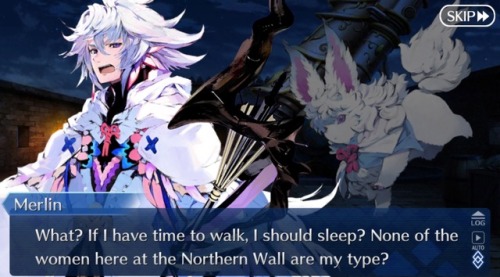
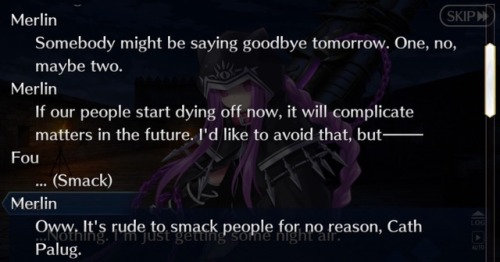
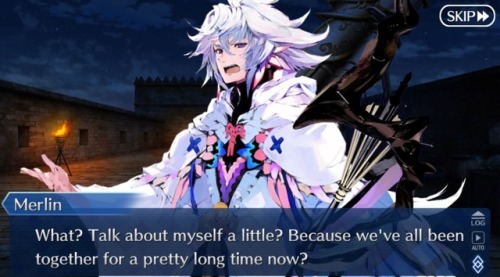
 In The Epic of Gilgamesh, the only reason that Gilgamesh (and mankind) didn't become immortal was that the Herb of Immortality that he had obtained was eaten by a snake. But in Fate, it was said that Gilgamesh "went back and obtained the Herb of Immortality again just for the sake of collection" but didn't use it because blah blah. Total BS and out of character for Gilgamesh! To Gilgamesh, he did not only fear death because he loved living, it was also because he wanted to observe humanity's path until its very end, so he saw death as an end to his duty as humanity's guardian. In Fate/Zero, he agreed to participate in the HGW because, in his words, Tokiomi had summoned and given him a body/a second life ("I treat him as my vassal and he supplies me with mana"), and that he later let Tokiomi be killed when Tokiomi planned to kill him. In UBW ending, we see that Gilgamesh stubbornly clings to life. It's because he hasn't fulfilled his goal or it's because he wants to see Kirei's path, etc. For whatever reason, for whatever purposes you see him cling to life, it shows that he still sees purposes in life and never wants to die. So, if Gilgamesh successfully obtained a method for immortality, he would no doubt use it! "Oh I'm over death" is an excuse to insert the "immortality isn't good" notion into the work - this is the authors' view - and not a representation of how the character should be. Gilgamesh in The Epic became more human because he had failed to achieve what he wanted, failed to overcome his human limitations. His brief sense of accomplishment and joy vanished just as quickly as he obtained it - that made him realize the full extent of his humanity, which was the final crucial step that completed him as a man and connected him with his people. The grief of Gilgamesh, the questions that death evoked and his quest for immortality resonate with every human being who has wrestled with the meaning of life in the face of death. Also in The Epic, Gilgamesh could not achieve the kind of immortality that was available to gods. Fate - by having him able to obtain immortality but turn it down by his own will - negates the whole meaning of his journey. Fictional authors have been using characters to speak their own minds, and anti-immortality is the message that Fate wants the audience to believe.

