Showing posts with label Fate series. Show all posts

28 June 2025

Fate series: My favorite Servant for each Class

Saber:  Arthur (male), Nero
Archer:  Gilgamesh
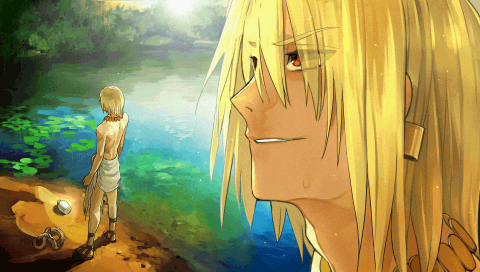
Lancer:  Enkidu
Rider:  Iskandar
Caster:  Merlin (male), Solomon
Berserker:  
Assassin:  King Hassan

[ to be updated ]

24 October 2019

How to get into the Fate series

FATE is originally a visual novel (VN) and light novel (LN) series that has  been adapted into manga and anime.   

I suggest watching FATE anime series in this order:
  1. Fate/Stay Night: Unlimited Blade Works (watch the 2014 TV series by Ufotable Studio, not the movie by Deen Studio): I suggest you start with this one to get familiar with the Fate world first.
  2. Fate/Zero 
  3. Fate/Stay Night: Heaven's Feel (3 movies) 
  4. Fate/Stay Night (2006):  the animation isn't good and the plot isn't faithful to canon. You can watch it or skip it, your choice.
After watching those first 3 series, then you can watch other Fate anime in whatever order you want. So far there are:
  • Fate/Grand Order: First Order (movie)
  • Fate/Grand Order: Camelot (2021 movies)
  • Fate/Grand Order: Babylonia - The Absolute Frontline Against Demonic Beasts (2019 anime series)
  • Fate/Grand Order: Solomon (2021 movie)
  • Fate/Extra: Last Encore 
  • Today's Menu For the Emiya Family (spin-off)
  • Lord El-Melloi Case Files
  • Fate/Apocrypha
  • Carnival Phantasm (parody)
Here is Fate/Zero Light Novel if you're interested in extra dialogues among the characters.


There are also several other Fate series that have not been animated:
  • Fate/Prototype (earliest script)
  • Fate/Hollow Ataraxia
  • Fate/Extra CCC
  • Fate/Extella
  • Fate/Grand Order (other Arcs)
  • Fate/Unlimited Codes

21 September 2019

Favorite character: Merlin

Merlin from the Fate series has been made into funny meme and people who don't know much about him tend to reduce him to a "dickwizard", which drowns out all the good aspects that his character has to offer. Some fans think that he is an asshole and when asked why they think so, their reasons can be summarized as:

"He cannot empathize with people. He has, can, and will fuck with people just for his amusement. He planned Artoria's life from her birth to her death and his one only real regret is that he made a kingdom collapse along with her."

I totally do not see it this way. Hopefully, with the release of Babylonia anime, the perception of Merlin will improve within the community.

Regarding Arthur and the fall of Britain:
Uther Pendragon secured Merlin's assistance in winning Igraine's - the wife of Duke Cornwall - love at the price of leaving his child in Merlin's care. Merlin told Uther a prophecy about his child, who would become his appointed successor during their war-torn times. This child was Arthur, the King that succeeded Uther and received Excalibur from Merlin. Merlin arranged the advent of Arthur to the throne (the sword in the stone), the founding of Camelot, and guided Arthur to establish the Knights of the Round Table. His knights ventured forth completing fanciful adventures involving mythical creatures with supernatural happenings at every turn. The wise wizard guided and protected Arthur and his court by using his magic to wondrous effect. It was Merlin that brought about this golden age. For years, the world came to Camelot to learn from Arthur and Merlin alike. . . . However, this is where our tale turns sour. Merlin disappeared (he fled to Avalon to evade the witch who wanted to kill him). Seemingly as a result, Arthur and his knights fractured. Camelot was in disarray. An evil reared its ugly head. Mordred now challenged Arthur for the throne. Arthur's Court was in shambles, and when King Arthur needed Merlin the most, Merlin was nowhere to be found. Soon, a battle ensued and in the aftermath, Arthur was mortally wounded, Excalibur was lost, and Camelot has fallen. The reign of the great King Arthur has ended. Britain had been fractured and wars over the crown were plentiful.  
  1. In Fate, Arthuria wanted to become a king of her own volition. When Merlin asked if she was sure about her decision to pull the sword from the stone, she did not hesitate. So, nobody forced her to be king. It's in her blood.
  2. "A foolish man, who playfully meddled with the fate of a single girl" -- this is assuming that Arthuria would have been happy living as a normal woman, which I doubt she would. 
  3. Arthuria wasn't the ideal King. This is the cold hard truth that Merlin realized too late into her kingship. She wanted to save only the people but not lead the country as a whole, which is evident through her wish to go back and change the past just to save "her people" regardless of how that would change world history. She failed to win the hearts of the people mostly because she believed that being King meant being a rigid/inflexible ruler. While the people needed a king, Arthuria's intention was to coddle the people, not to lead them.
  4. The series is called "Fate" for a reason. 
  5. Morgan le Fay played a big role in turning many important figures against Arthur; she's also the reason that Arthur died in the last battle because she stole Avalon. If there was someone to blame for the fall, it's Morgan. It's ridiculous how she gets a pass while Merlin gets all the blames.
  6. Merlin can predict the future with his Mystic Eyes so he knew what would happen to Arthur. On the other hand, he also saw an alternative future where every Briton was enslaved and an age of darkness was ushered in. Britain was doomed from the start. The King of Britain would drive the Saxons out of their country but inevitably, the Saxons would overcome the Britons and ruled over Britain. The fall was delayed for at least a few decades by the ascent of Arthur to the throne.
  7. Merlin did try to tell Arthur about the future that he saw. Remember that Merlin once tried to cue a talk about the future only to be dismissed by her stubbornness. As a demigod, Merlin's policy is to not be biased toward individuals but only be concerned with the fate of humanity as a whole. 
  8. Merlin deeply regrets Arthur's fate to the point that he secludes himself in a tower out of guilt. For he who claims to not possess human emotions, this is a big deal.
  9. Some people hate on Merlin for giving Arthuria a magic penis, oblivious to the fact that it was Arthuria who asked for it in order to have a child with Guinevere. She possessed both Excalibur and Avalon but didn't have any intention to become an immortal ruler and still needed an heir.
    "性別を偽っての王宮生活は気苦労の連続であったろう。 なかでも困ったのが世継ぎの問題だが、マーリンの魔術で事なきを得られたそうだ" [ "It must be tough to live in a palace while disguising her gender. The greatest problem was probably producing an heir, but that was solved by Merlin through magecraft." ] ~ Fate/Material pages 63-64

From "Garden of Avalon" CD Novel:

> With a joyful smile on her face, she said, "Yes. I have faith that I'm doing well in that regard. Please watch me, Merlin. I can't say it will be soon, but I will definitely turn this island into a prosperous country. One that can even measure up to the utopia spoken of in the legends, Avalon." As if feeling happy from the bottom of her heart, she puffed out her chest in pride. 

> “—————————” It was at this moment that the mage realised his mistake. [...] If she continued on this path, she would face nothing but regrets.  "Avalon might be a little too grand. Even I have never been there before."

At this moment, Merlin realized that Artoria wouldn't be able to handle the fall of her kingdom. He constantly reminded her that Camelot would fall.

> "Arthur, no matter how hard you try, all must come to an end. Nothing lasts forever. Everything is constantly transforming into something new. Therefore, it isn't the future that you should be protecting." 

... to which she responded with: 

> "Jeez, what is it this time? You're being awfully talkative today." 


Regarding empathy/emotions:
  1. While Merlin claims he isn't human, his actions prove that he is among the most humane, having a real sense of kindness that few other heroes possess. 
  2. In Babylonia, everyone and their grandmother loves to bully Merlin but that doesn't change the fact that his heart is big enough to take all that crap upon himself while still continuing to help and guide them to victory, saving them as he's been doing since the beginning.
  3. Merlin thinks that he's unable to understand emotions but he found enjoyment in human activities. "I love to see reveries of hope and joy". 
  4. He sees people's stories through empathy and offers wisdom to whoever needs it.  "Go, Cath Palug, I’m fine here. With your freedom, you will play into something really beautiful."
  5. When he saw the burdens that Arthuria was carrying, he realized that she would regret her kingship regardless of the outcome. In another instance, he sees through the truth of what's really troubling Ana about humans. 
  6. In Garden of Avalon CD, Merlin muses on the irony that neither he nor Arthur understood love. Merlin might not understand what love is, but he seems to have a lot of love even when he doesn't realize it (eg, he seemed to have developed real bonds with Arthur, Guda et al, and found that he cared for them more than he thought).
  7. "Go, Cath Palug, I’m fine here. With your freedom, you will play into something really beautiful."

Relation to humanity
  1. In My Room Lines, Merlin says that "humans" are one of the things he likes. He doesn't like individual humans but loves the stories we create. He risks his life to save our ass in Babylonia, helps out in America and Camelot and has been supplying Chaldea with mana all this time.
  2. Like Gilgamesh, Merlin does not like/care about individual humans. They both simply love the stories and the progress that humanity creates. That is a good thing, is it not? The difference between them is that Gilgamesh is more active in pushing humanity forward while "Merlin takes a laidback approach of letting humans handle their own business and only interferes when necessary. Merlin shall believe in the Master, the hope of human history; he shall lend his power to the utmost, and then he shall entertain himself relaxingly. Merlin's desire is to carve open a path for the protagonist's destiny, to watch him off as he walks towards the future, to gaze at that kind of "beautiful view".
  3. Merlin is constantly learning about humans despite stating that he does not understand them. For example, he wants to try out Master-Servant relationships to experience them = he's learning to be human.

To me who has been a longtime fan of Disney's Merlin, Dumbledore and Gandalf, Fate's Merlin quickly caught my attention. I didn't like him at first because of his youthful design that is very different from the fairy-tale archetype. But, his presentation in Babylonia is absolutely delightful! His Room Lines are the definition of "cuteness". His stage play version came across adorable. Nothing fazes him in any situations. He's cool, tempered, wise and playful - like I imagined.  80% of Merlin already comes from already existed legends; Fate simply adds 20% to it. Reasons this character is one of my top favorites are the above plus the following:
  • Merlin the Wise. He's a kind soul who's willing to impart his wisdom and magic teaching on anybody who asks for it. Look at how well he brought Arthur up! I love how he served as a Court Mage and a mentor for both Arthur and Gilgamesh. His leadership in Babylonia plays a huge part in the battle's success. Gilgamesh gives orders from the throne while Merlin leads the squad. Merlin never loses his calmness - he's staying calm to make sure that the Master of Chaldea feels assured that everything is okay.  
  • THE Merlin. Merlin is accepted as one of the wisest, most powerful wizards of all time. But he has no interest in power-tripping or world domination. He mostly keeps to himself and occasionally interferes with human affairs to push humanity forward.
  • Super chillax and funny. Merlin doesn't bother with formalities and treats people as equals from the get-go. His antics may bother some people but to me it's fun and lively. When I'm old, I wish I'd be as cool as him :D
  • As powerful as he is, he is not embarrassed to ask others to protect him when necessary [ eg, when faced with Gorgon's Mystic Eye of Petrification, Merlin shouted out to his comrades, "Protect me, whatever it takes, defeeeeend meeeee." ] :D
  • Strong sense of self-awareness. Merlin understands his own flaws more than most people understand themselves. 
  • White magic. The first time I saw his Noble Phantasm "Garden of Avalon", I immediately knew that he's on the side of goodness. Flowers bloom around his feet when he walks. He can make flowers bloom in the darkest of places. Someone who possesses such pure, beautiful magic cannot be a bad person.
  • "Generally, he is the Mage of Flowers who retorts at most things with a refreshing smile and a calm expression such as 'now, now.'” Overall, Merlin's personality makes it impossible not to like him.

Other criticisms of Merlin from other Fate fans include:  "Merlin came up with even weirder things than penis:
  1. "Insists that you call him Big Brother Merlin (Merlin onii-san)"
  • Okay, this is a criticism that I agree with. Merlin's character design looks very cool and I don't mind his young-looking face since Fate tends to make Servants young for the sake of appeal, but his voice sounds too young. I imagine that his voice should sound a bit warmer. They gave him the same voice as Proto Arthur, too, which I think is unnecessary =.=  Plus, the way he acts in the Babylonia stage play: telling the MC to call him "onii-san" + a teensy dance, which make me go - in the words of another fan: "This Merlin gives off the feel of a hooligan".. LOL!  Merlin isn't an "onii-san" in any sense. I don't mind deviating from the original myth, but this kind of change is out of place / awkward for his character and feels very fanservice-y.  The stage actor who played him is pretty good; his voice is warm and his Merlin is adorable but I don't think he's supposed to act like a teen, especially not an "onii-san".
  1. "Trolled Quetzalcoatl so hard she got struck by divine punishment and lost half of her Divinity."
  • Rebuttal:  Quetz had the possibility and reasons to turn her back on humanity; she could become an Avenger due to how her civilization had crumbled and abandoned her. While Quetz didn't agree with Tiamat's plan, she didn't want to protect Uruk, either. She chose to protect some people, get rid of others and repeat because she felt it's fun to mess with humans and their struggles. In the war against the almighty gods, Merlin was able to disarm a powerful goddess without a physical fight! 
  1. "He doesn't use incantations because he bites his tongue while chanting". 
  • Okay, this is one way that Fate nerfs Merlin because the series can't afford to have a too-powerful character, otherwise he would win every battle and the MCs would have nothing left to do. Same reason for him being stuck in the Tower and can't participate in the Solomon Arc finale.
  1. "Lazy as fuck. Him: "Why need to use spells when you can just hit it with a sword?" (He fights like Gandalf, with Excalibur).
  • This is actually something I really like about his character. Merlin is like Sun Wukong in this aspect: enjoying trolling people / making them do the work just because it's fun AND having the power to get away with it. The Mage of Mages doesn't bother with "trivial" stuff but when push comes to shove, he will always be one step ahead when possible.

"Only the sinless may pass."

Why would Merlin judge himself as a sinner, if by his whimsical nature, he does not sin? 
Why would Merlin, who carried out the future that he saw, feel any guilt over guiding the king down his path?

… Humanity is a strange thing.
Not all who are of its species are humane in their thinking, while many beings that humans shun and fear would be, in fact, the most humane of us all.

15 March 2019

My head-canons regarding the Fate franchise


  1. Servants don't lose memories of their past summons.
  2. There exists only 1 timeline.
  3. Gilgamesh failed to obtain immortality because a snake ate the Herb; he never went back to retrieve the Herb just for the sake of collection and never used it [ true to the original myth ].  Reasons being.
  4. Servants can teleport.
  5. Male Arthur instead of Arthuria.  Or Arthur and Arthuria are siblings.
  6. Merlin is the younger version of Disney's Merlin, the all-time most powerful wizard, has Clairvoyance of past, present and future like Solomon's + Sha Naqba Imuru like Gilgamesh's.
  7. Merlin can teleport in and out of the Tower at will.  [ This is actually canon now ].
  8. Gudao and Gudako are Rin and Shirou's future children.
  9. Gudao is pretty skilled at combat to fend for himself whenever the Servants aren't around. 
  10. Mash really dies when she sacrifices herself in Solomon Arc, thus, Cath Palug remains a magical beast with intelligence and personality.  [ It's incredibly absurd to have Cath Palug sacrifice something as significant as sentience to save the protagonist "waifu". The fanbase would riot if it were a human character that did what Cath Palug did. Also, when a mortal character "sacrifices" herself and later comes back to life, it feels cheap ]. 


[to be continued]

My unpopular opinions on the Fate franchise

  1. Male Arthur > female Arthuria.
  2. Last Encore is a decent adaptation. 
  3. I despise the Fate protagonists' thick plot armors.
  4. I read F/E CCC just for Gilgamesh; I don't like the plot at all.
  5. Fate/Zero > F/SN.
  6. Nero > Tamamo.
  7. I hate the idea that "ANYONE who left a significant reputation among humans is deified", thus we have Jack the Ripper. By this definition, suicide bombers would qualify as "heroic spirits". This is absurd and made for the purpose of including any character the franchise wants to include = $$$.
  8. I don't like loli in general.
  9. Mash is boring and her coming back from death (worse, at the sacrifice of Cath Palug) is a cheap protagonist/waifu armor. 
  10. I hate all the overused Saber/Rin/Sakura faces.
  11. Excessive gender-bending sucks. 
  12. I hate how the most relevant (eg, Archer, Lancer) or powerful (eg, Merlin) characters are pushed aside so that the MCs (Shirou, Gudao, Mash) can have the spotlights. 
  13. Nasu's anti-immortality viewpoint that he forces on Fate is dumb.
  14. The Ishtar hate is unfounded. Ishtar is delightful in Babylonia. Especially her and Gil's interactions are awesome!
  15. The Merlin hate is unfounded. Merlin is a delight and helping us out tremendously throughout the series.
  16. Merlin is severely nerfed so that other characters can play their roles.
  17. Enkidu has no personality, and he isn't this cutie pie that everyone makes him to be. His whole existence was to develop Gilgamesh's character.
  18. I see no romance between Gilgamesh and Enkidu.
  19. While I like the dark theme in Heaven's Feel route, I hate it for the bad romance and unconvincing characterization (Sakura).
  20. Nasu is a pandering writer who created too many tropes and waifu/protagonists plot armors.
  21. I hate the fact that Jaguar Man is Taiga in Babylonia. What a waste of a potentially awesome new character! 

09 March 2019

Fate Lore: The Legend of King Arthur

  1. Legend of King Arthur (not Fate)
  2. Merlin (not Fate)
Fate version:

Arthuria was born during the war-torn Dark Ages after Britannia lost its protection from the Roman Empire. During this time, Uther Pendragon was the King of Britain and he had already fathered a daughter (Morgan le Fay).

Merlin, an Human-Incubus Hyrbid and a powerful Magus, had prophesied that their next child would be Uther's successor and Uther believed this. However, when Arthuria was born, Uther despaired as she was born a girl, not a boy. In those times, a King could not make a child that was not a male his successor even if she was fated to one day become a king. Merlin was delighted because the sex of the child had never mattered and he was confident that if Arthuria was separated from the castle until the day of prophecy, it would be proof that she would become king.

At the age of five, Arthuria was entrusted to one of the king's vassals, Sir Ector, who while he did not believe in the prophecy, he did feel the same air from the young Arthuria as he did his king. Arthuria was then adopted and raised with Ector's own son Kay training them both as simple knight apprentices.

Kay could tell that Arthuria would grow up to be a beautiful woman but his father told him to guide her like she was his brother and decided to treat her in that manner, though he did not believe it would be kept secret. Initially, Arthuria was raised under the belief that she and Kay were related by blood but she was later told the truth while growing up. Despite this their relationship did not diminish from the truth, and they still felt they were true siblings.

Arthuria acted as Kay's squire and received training from him while also doing other chores such as pulling along his horse. During their sparring, Arthuria was the greater in terms of swordsmanship however Kay would use "warped reasoning just on the verge of being correct" to make her feel like she had lost despite winning, reasoning like:

"You lose since you threw away your sheath!"
"I'm still alive so don't act like you won!"

While Arthuria was being raised by Ector, Merlin also visited teaching Arthuria and acting as a father figure to her.  He also also revealed Arthuria's gender to Kay making him swear to secrecy.

When Arthuria was 15, the day of prophecy arrived and Merlin prepared Caliburn for the selection of the next king. When the Knights and Lords gathered for the selection of the next king, they expected the selection to be through jousting to select the most superior one to become a king, but they were presented with Caliburn stuck in a stone with the inscription on the hilt reading:
Whosoe'er pulleth out this sword of this stone is rightwise king born of England.
While many knights grabbed the sword trying to follow the command, none was able to pull it out. With no successful attempts, they began the expected jousting to make the selection. At this time, Arthuria was still an apprentice and thus not qualified to joust. She walked to the now deserted stone and reached out for the sword without hesitation.

Before she started grabbing it, Merlin appeared before her to tell her to think things over before taking it. He told her she would no longer be human upon taking the sword, but she had been prepared for the fact that "becoming a king means no longer being human" ever since she was born knowing that a king is someone who kills everyone to protect everyone, having thought about it every night and shuddered until morning came with not a day passing where she did not fear that fact. To Merlin, her response was a nod saying that the fear she has felt would end then Arthuria pulled the sword out effortlessly as per her fate and in that instant, she became something not human. To everyone else there, so long as she acted like a good king, no one would care for her appearance or gender. Taking the sword also had an effect on her body stopping her from aging as such from then on the King would have a body of a 15 year old.

After that Arthuria, Merlin and Kay went through various adventures while training the rightful King of the country while reclaiming the country and the 3 of them formed the Round Table but later was joined by Bedivere and Gawain who along with Kay became the most senior knights.

Morgan le Fay, who was born as the proper, recognized daughter of King Uther and Arthuria's older sister of the same status, in her eyes believed Arthuria received the love and hope of their father that should have been hers, became a witch queen who craved for vengeance. After Merlin taught her so much she became "the wisest woman in the world", Morgan betrayed Merlin away by threatening to torture and kill him. During their adventures, Morgan executed a trap which saw Arthuria lose Caliburn.

After the final battle against her uncle Vortigern, Arthuria claimed her kingdom Camelot and spent 10 years in peace. During this time, Arthuria had to deal with the problem of being able to produce an heir. To help, Merlin used his magecraft to make Arthuria into a pseudo-male capable of producing sperm for an unknown duration of time. During this time, however, Morgan le Fay used her magic to enchant her sister to take some of her sperms. Using her own ovaries, Morgan developed the sperm and have birth to a homunculus clone of her sister, named Mordred.

Arthuria met the daughter of King Leodegrance, Guinevere, and the 2 wedded to make an outward appearance of a "kingdom" in Britain. They even held a grand wedding ceremony that lasted close to 7 days and was celebrated throughout the land. However, it was a marriage out of necessity rather than love, where Arthuria, the "husband", was not a man and the marriage would never be consummated.

During this time, Mordred was raised by Morgan to believe it was her right defeat the King and inherit the throne. Through her mother's recommendations and a presentation of her own swordsmanship, was able to be counted as one of the Knights of the Round Table. Despite her mother's obsessive hatred for Arthuria, Mordred never hated Arthuria yet idealized her as the perfect king. She later learned of her heritage of being Arthuria's "son" and was happy in learning that she shared the same blood as the king she idolized, however Mordred also felt ashamed of her twisted birth.

As Arthuria continued to be king, she kept to the oath that a king is not human and that one cannot protect the people with human emotions. Never narrowing her eyes in grief while on the throne and settling every problem while working hard in government affairs, Arthuria managed to balance the country without any deviations, and punished people without a single mistake. This however lead one of her Knight, Sir Tristan, to leave Camelot saying:
The King does not understand how others feel.
Hearing this, Lancelot wished to lessen the burden for his King, a wish that Guinevere also held. While they conversed with each other, they came to recognize each other as friends and it was then that Lancelot began to fall for Guinevere. It was through Guinevere that he learned of Arthuria being a woman and the true meaning to Guinevere's marriage to her.

At some point in time, Mordred approached Arthuria about her identity and her "son" but rather getting the acceptance she had hoped for Arthuria rejected her stating that while Mordred was her child born from her and Morgan's plotting, she could not recognize Mordred as her "son" or give her the Throne. Mordred believed this was because Arthuria hated Morgan and no matter what she did, the moment she was born from Morgan, she was a dirty child and the shame of her birth began to become hatred.

Lancelot and Guinevere began to have an affair and this was discovered by Agravain, one of Arthuria's Knights, and an assassin hired by Morgan whom he hated. Agravain was loyal to the King, however, he hated women due to Morgan and when he uncovered the affair, he also learned of Arthuria's true gender. He tried to threaten Guinevere with the fact of her affair but failed. Before his death and seeing Mordred's growing hatred (while probably not knowing Mordred was a woman as well), he revealed the affair to her who used it to sow mistrust in the Knights of the Round Table and destroying the prestige of the King in the eyes of the people.

When Arthuria learned of the affair, she did not blame anyone but rather understood knowing Guinevere's and Lancelot's sacrifice. However, still acting in the capacity of a king and this times adultery was a serious crime, Arthuria discarded her emotions and had Guinevere executed. Lancelot tried to save her, killing several of his fellow knights including Gawain's brothers, Gareth and Gaheris, but ultimately failed and fled to his homeland of France.

When Arthuria left for the Rome expedition, Mordred became the leader of the rebellion representing the national discontent towards the King. When Arthuria returned, Mordred raged and proclaimed her hatred of the king and that only she was fit for the throne. The truth was that she only wanted to be accepted by Arthuria as her "son". This sparked the civil war that would later claim their lives.

Shortly before the final battle of Camlann Avalon, the sheath to Excalibur that gave Arthuria immortality, was stolen due to the machinations of Morgan le Fay. Lancelot, even after being excommunicated, wanted to participate in the Battle of Camlann to serve his King but Gawain hostilely rejected him.

Merlin left Arthuria before the final battle because he claimed that an evil witch (Morgan? Lady of the Lake?) tried to murder him so he fled to the Reverse Side of the World and thus the land of Avalon where he thought the witch couldn't reach him; however, the gate he encountered was a trap which created a sealing "tower" called the "Garden of Avalon", and having transcended death, is trapped for all eternity.

During their final battle, Mordred hated the "Son of Morgan" but Arthuria replied: "Not once did I despise you. There was only one reason I would not give you the throne. You didn't have the capacity of a King."

In their battle, Mordred was fatally wounded by Rhongomyniad but because of a curse on her, still swung her sword and fatally wounded Arturia.

Arthuria's dying body was escorted to a holy isle by Sir Bedivere where she ordered a grieving knight to dispose of Excalibur by throwing it back to the Lady of the Lake, an order he failed twice believing that the moment Excalibur was returned to Vivian, Arthuria would die.

In Bedivere's absence, she reflected on her personal failures, regretting her life as king. Before her last breath, she appealed to the world; in exchange for services as a Heroic Spirit, she asked to be given an opportunity seek the Holy Grail to save her country.

source

04 March 2019

Fate series: The View on Immortality

This is a combined post written by me and Ashe_Black.  I agree 100% with Ashe_Black.
The general theme in the Fate Universe has always been that the antagonist or the "perceived villain" are the ones who seek immortality or believes immortality to be a benefit to humanity. While the protagonists have always been those who oppose it or believe it to be a detriment to humanity. 
Fate generally argues that using Magic to grant humans immortality would be akin to cheating, or halting their growth, or is just bad. For reasons as trite as because it is not natural.
I completely disagree with Fate's view on immortality.

In The Epic of Gilgamesh, the only reason that Gilgamesh (and mankind) didn't become immortal was that the Herb of Immortality that he had obtained was eaten by a snake. But in Fate, it was said that Gilgamesh "went back and obtained the Herb of Immortality again just for the sake of collection" but didn't use it because blah blah. Total BS and out of character for Gilgamesh! To Gilgamesh, he did not only fear death because he loved living, it was also because he wanted to observe humanity's path until its very end, so he saw death as an end to his duty as humanity's guardian. In Fate/Zero, he agreed to participate in the HGW because, in his words, Tokiomi had summoned and given him a body/a second life ("I treat him as my vassal and he supplies me with mana"), and that he later let Tokiomi be killed when Tokiomi planned to kill him. In UBW ending, we see that Gilgamesh stubbornly clings to life. It's because he hasn't fulfilled his goal or it's because he wants to see Kirei's path, etc. For whatever reason, for whatever purposes you see him cling to life, it shows that he still sees purposes in life and never wants to die. So, if Gilgamesh successfully obtained a method for immortality, he would no doubt use it!  "Oh I'm over death" is an excuse to insert the "immortality isn't good" notion into the work - this is the authors' view - and not a representation of how the character should be. Gilgamesh in The Epic became more human because he had failed to achieve what he wanted, failed to overcome his human limitations. His brief sense of accomplishment and joy vanished just as quickly as he obtained it - that made him realize the full extent of his humanity, which was the final crucial step that completed him as a man and connected him with his people. The grief of Gilgamesh, the questions that death evoked and his quest for immortality resonate with every human being who has wrestled with the meaning of life in the face of death. Also in The Epic, Gilgamesh could not achieve the kind of immortality that was available to gods.  Fate - by having him able to obtain immortality but turn it down by his own will - negates the whole meaning of his journey. Fictional authors have been using characters to speak their own minds, and anti-immortality is the message that Fate wants the audience to believe.

Gilgamesh, Alucard, Sun Wukong, etc. - all these characters who strive for immortality have an interesting thing in common:  They all share a great fear of death. That fear alone motivated them to master great deeds.   Their desire for immortality and power was also motivated by the fear of losing what they had.  This is a very HUMAN desire, considering that immortality has always been humanity's greatest dream!

There's nothing "unnatural" about immortality - just as there's nothing unnatural about the advancement of Medicine and technology.

Given that life has been struggling to evolve and survive as long as possible through any means possible, reproduction is just a very poor form of immortality. If we could pass on our consciousness through our offspring akin to instinct then it would be by definition immortality.

Not only in Fate but in a lot of other fictions (like Hellsing), the anti-immortality perception is widespread.  I believe that it is some authors' way of giving solace to themselves and to the human audience watching their fictions. Ultimately it's all a form of convincing oneself that one's own state is okay because there is no better alternative realistically.  IF the immortality option is actually available to us, how many of us will honestly turn it down?!

As I wrote about this for Hellsing, I completely disagree with the "reject immortality for any reason" notion. Because it is anti-progress for attempting to put a stop on humans  dreaming about and striving for the possibility to begin with. More of my view on Immortality

08 February 2019

Favorite character: Gilgamesh

Gilgamesh is a character that I went from dislike to like as I went through the Fate series. I initially disliked him when I got into FATE starting with Unlimited Blade Works and Fate 2006.  Then I realized that Gilgamesh FSN version is just where the author (Nasu) inserted a quick villain to be an "anti-Shirou" device, no more and no less - anyone could fill that role - whereas his character is very well-developed in is character is very well-developed in Fate/Zero (by Urobuchi) and subsequent works where we can see his reasoning, his legend (which is one of the coolest) and his dynamics with other characters. Even his interest in Arthuria in Fate/Zero has some basis in ideologies rather than FSN's "yo, I'm just here to be the MC's love rival".

If I have to say anything about Gilgamesh, it's that he's defiantly got a personality. His backstory and complexity fascinate me despite the fact that I don't normally like arrogant people. Gilgamesh in his younger years was never "good" in a Disney sense, but not evil, either.

An interesting "grey" character is much better than a boring hero. The Epic of Gilgamesh is the earliest hero story of mankind where the MC has more character development than most fictions nowadays. Fate/Zero is just a glimpse into that. There are also F/E CCC, Extella and Babylonia, which together give us a complete picture of who he is.

Guardian of Humanity

All of Gilgamesh versions would die for humanity.

"At first I acknowledged the gods and protected humans. When my childhood ended, I hated the gods and favored humans."

Born from a goddess and a human king, Gilgamesh was created by the gods to connect humanity closer to them. However, he dislikes past kings because they were god-fearing weaklings in his eyes, and he chose to depart from the gods so that humanity could thrive. And his rule, with him rejecting the gods, began the Age of Mankind!  
The protection of gods is no longer needed in the world of man. As proof, I built a fortress, and you all answered my call. I know now, with certainty, that it was no mistake! And now this final trial will test it, and us, to the utmost. 
Now is the time to deny the primordial gods and begin the Age of Man! Mind yourselves, my elite warriors! This is the battle for true separation from the gods! Give your lives to me, the king! Pass on the glory that is Uruk to generations to come, to the last man!
~ Gilgamesh's declaration to Uruk as Tiamat approaches
In UBW, Gilgamesh wasn't trying to destroy humanity; he's trying to save it. He's willing to make himself a villain as long as it means humanity's improvement in the long term. While he floated through the Grail's mud at the end of Fate/Zero, it showed him visions of all of humanity's worst moments. Gilgamesh loves humanity's potential and was already expecting us to expand to the stars in his vision but he found that we grew complacent instead. For he who thinks lives are worthy only if they strive to live their hardest, seeing modern humans' complacency compared to the people in his kingdom (which is described in Babylonia where people remained steadfast and unbroken before the daily assaults of deities) made him feel disgusted. And being given a physical body by the Grail, Gilgamesh felt that he had the responsibility to steer humanity's path.

I think that his thinking was, to some extent, correct:  comparing Babylon in ~2600BC vs. the Middle East today, and ancient Egypt vs. today's Egypt,... I can't help but wondering: After thousands of years, humanity should be much much better than that, right...?  As another fan pointed out: "Gilgamesh's end-goal of 'purging' through Angra Mainyu (aka: All the World's Evil) was "fair" from his point of view: It's 6 billion humans vs. 6 billion evils born from themselves. And it made sense to him that humanity should be able to defeat its own evils". So he tried to fix it by kick-starting a Darwinism process with himself as our immortal leader to guide us - though his method in UBW was bad. But then, being an "Ally of Justice" doesn't mean being chivalrous or altruistic. Like EMIYA who has to do a lot of killings as a Counter Guardian to 'save' humanity, what Gilgamesh tried to do is what Counter Guardians do on a larger scale.

While Gilgamesh does not like individual humans, he loves humanity as a whole. Like Merlin, he doesn't like individual humans but the stories, the legacy, the achievement of humanity. He works his people very hard because he thinks that lives are worthy only if they strive to live to the fullest. He challenged people to grow because he thought protection could make them complacent and stagnant. I do not agree with this line of thinking. (But as we can see in F/E CCC, he enjoyed pushing Hakuno because he wanted "to see the story of the human Hakuno"). At the same time when people were threatened by something huge (eg, Humbaba, Altera, the Shadow, Tiamat,...), he went to fight them to protect humans.

An Epic Journey

Coming face-to-face with his own mortality set him on a quest for immortality, only to fail to gain it and eventually, he accepted that he would someday die. To Gilgamesh, it's more than the fear of death itself: "The despair that he felt was because he saw death as an end of his duty as the observer of humanity: in order to fulfill his mission completely, he wanted to observe humanity's path until its very end."

Gilgamesh wanted to escape human limitations, to get answers to questions not available to his contemporaries, and most importantly, he wanted to overcome mortality both for himself and mankind. At the end, he came to term with his limitations as a human. This completed his journey, achieving the final crucial step: By pushing himself past disappointment and grief and focusing on the needs of his people, Gilgamesh triumphed and became a nobler sort of hero. Is he a role model? No. But he can serve as a symbol for an aspect of humanity, of growing past mistakes and accepting limitations. In the end, Gilgamesh is considered a hero not just for his incredible deeds but for coming to understand and accept his true nature.
  • One of Gilgamesh's achievements was the construction of the city walls of Uruk to defend his people from enemies. 
  • Gilgamesh designed and beautifully remodeled the ancient Sumerian city of Uruk. 
  • Uruk's flourishment speaks for itself.
  • His departure from gods (despite his mother being a goddess) enabled humanity to stand on its own feet. This feat alone qualifies him as Best King in my standard.
  • He protected humanity against superthreats like Humbaba.
  • His wish to escape human limitations, to get answers to questions not available to his contemporaries and to overcome mortality. 
  • He proclaims the worldwide glory of "He Who Saw the Deep", who shall be remembered for his wisdom, who disclosed a secret and who brought back reports of what had been before the Deluge.  
  • His path was long and difficult, a road less traveled, a way of many trials and tribulations. He nevertheless completed the journey and became wiser than any on Earth, and he engraved what he had learnt on a stela for the sake of posterity. 
  • He's a true renaissance man who embraced humanity advancements. For example, the future he wants to for humanity is one in which we'll emigrate to other planets and explore the universe, which is pretty awesome! Tell me how many modern leaders even have this on their mind?!
Gilgamesh wants to see exceptional things, especially people who are trying to do impossible things and have the abilities to come very close to obtaining these dreams, those who defy gods/destiny, those who never give up no matter what.

This character has so much depth and complexity that I can't put all into words.  Easily 1 of the top 3 in the Fate franchise. I take Fate/Zero Gilgamesh as canon and much closer to the complexity of his legend. Urobuchi says that he tried his best to give more dimensions to Gilgamesh but "didn't quite succeed" because he had to keep his character somewhat close to FSN. In my eyes, he has succeeded, since Fate/Zero characterization of him has set the precedent for his subsequent installments in CCC and Babylonia

These other instances illustrate the reasons why I came to appreciate this character:

Banquet of Kings scene - see this entry for my take on this brilliant scene.

Then:

Kirei talk with Gilgamesh (part 1)
Kirei talk with Gilgamesh (part 2)

Kirei's talks with Gilgamesh felt like therapy sessions for Kirei. Gilgamesh's read on humans is remarkable. As a little example, he could instantly tell when Kirei deliberately withheld information and lied to him. Kirei was an enigma, even to himself, and that fascinated Gilgamesh. Kirei was selected by the Grail because he had a wish worthy of it, yet he did not even know what that wish was. He did not even know what pleasure was, and just blindly believed it to be a sin as decreed by his religious faith. He was a man who was unlike others yet performed outside of his nature for he was instructed to do so.  Gilgamesh had quite the plaything in front of him to try to unwrap and enlighten. By having Kirei undertake the exercise of learning the wishes of the other Masters, Gilgamesh was able to pick up on what Kirei unconsciously was drawn to the most: the plight that Kariya Matou was suffering in his "foolhardy" attempt to save Sakura. (If you paid attention closely when Kirei was talking about Kariya, you see that he smiled for the first time in the series). As Gil pointed out to him, 'it is possible to find pleasure in suffering and tragedy'. Kirei quickly rejected the thought as inhumane and a sin, and thus something he, as a member of the Church, should reject. Yet the Grail granted him new Command Seals. Thus, with the aid of Gilgamesh's prodding, started the path of Kirei finding his own (albeit twisted) happiness, freed from being Tokiomi's minion...

This scene shows how Gilgamesh is not only a fighter or an experienced king, but a man. He has seen much of what the world has to offer and learned much in the process. According to him, one should seek pleasure instead of drowning in hypocrisy. I can’t really put it any better: This scene shows the audience how wise Gilgamesh is! (when his ego isn't talking). He taught Kirei to question doctrines. He didn't mind what Kirei chose, as long as it's his own choice. [ Not sure if I agree with the "do whatever you want as long as it pleases you" line of thought - it makes me THINK -- this is why Fate/Zero is brilliant! ]. Gilgamesh likes it when people are honest. He is also self-aware.  As an example, you can totally say he's a tyrant and an asshole to his face and he will laugh and praise your honesty (eg, Andersen, in contrast to the pretentious majority on this planet who would 100% get mad if you told them they were fat/short/thot/etc).  Everyone whom he has taken a liking to are those who never kiss up to him. He likes Kirei, Iskandar and in a terrible way, he "likes" Saber as well. There are 3 characters in the series that Gil uses the more friendly "omae" for: Enkidu, Kirei and sometimes Saber. Iskandar, he calls "sonata" which is very respectful and he only uses it for him. None of these people ever had to work to make him like them. In fact, Kirei spends most of F/Z trying to ignore and insult him. Despite this, Gil is barely ever rude to him and only threatens him once: he says if he ever tires of Kirei, he'll kill him, but considering they spend the next decade together, it just enforces how much he likes him.

"'All the evils in the world'? Bring thrice as much if you want to taint me!"

How Gilgamesh overcame All the World's Evil when he was bathed in the Grail's mud in Fate/Zero (excerpt from the Light Novel):

—A vortex started up. Sin, the evil in this world, circulated and multiplied and chained and changed as it whirled into a vortex. Gluttony lust greed depression wrath sloth hypocrisy pride envy, over and over again encroaching and sprouting, whirling into the vortex.

The crime of rebellion, the crime of intimidation, the crime of adultery, the crime of destruction, the seven cardinal sins, the crime of coercion, .............. all crimes should be assessed and sentenced to capital punishment or severe punishment. Refuse and deny all hatred. Kill kill kill. It is absolutely forbidden. Kill kill kill. He will absolutely not agree. Ah it is really boring to have only this one thought—


“—!?”

The vortex of sound that was the curse now circled. There existed something here that should not exist; from within the barrage of denying curses, a voice cried out, 

"Yes!"

Impossible. Affirmations and correctness did not exist within this cursed vortex of hatred. Because everything had determined that everything was ugly and hateful, this word could not appear here—But that voice announced again clearly, 

“That is right.”

That is right. The world was originally already like this. Since the truth has been put before your eyes, why do you sigh? Why are you surprised?

“—!?”

The voice of the curse asked, "What was right? Who was there to acknowledge it? Who was there to permit it? And who was to bear the burden of sin?"

Facing the bombshell tossed from the darkness—in reply, a resounding and concrete sneer:  "A foolish question. That goes without asking. The King will acknowledge it; the King will permit it. The King will bear the burden of the entire world."

“—!?”

The mud asked, "What is a king?"  But at the same time it asked the question, it realized it had contradicted itself. In this place that strictly did not allow the existence of entities, the mud had admitted that there was someone else within it. Some strange foreign object that could not exist had appeared here. That was—King—the presence of an absolute controller, as well as one without equal.

"His name was—King of Heroes, Gilgamesh."

“That is I!”

The black mud cracked and dispersed away, leaving flying droplets. The foreign object it could not digest even by mobilizing all its hatred appeared from within the black mud. Within the burning ruins, he once again stood upon the ground. The perfect, golden-proportioned body was no longer the spirit form that it had taken during its time as a Servant, but a true flesh body. The black mud that denied all life crystallized the impurity within itself and then abandoned it, with the result that a certain Heroic Spirit had realized his wish of obtaining a corporeal body and returning to this world.

Even standing right amid a burning hell, the majesty emanating from the body of the king made the surrounding flames afraid to come close. Gilgamesh generously bared his naked statue-like body, sneering impatiently.


Even though he felt it to be very troublesome, he could not refuse to meet battle since this was the challenge issued to him by the gods. Gilgamesh began to laugh wryly again at his status as the King of Heroes.


Also, Kirei's revival:

"The black mud which had been unable to corrupt Archer followed the path of the mana supply that had formerly linked Archer to his Master, arrived at Kotomine Kirei’s physical body and became the source of a life-force supply that substituted for a heart". Thus had Kirei revived.

Why did the mud spit Gilgamesh back out?  Because the Grail could not corrupt him even after utilizing all of its hatred. Servants are normally corrupted upon contact with the Grail, but Gilgamesh is incorruptible due to his powerful ego that can stave back the mental pollution. The anime makes it look like "being spit out of the mud" was no big deal, but this is one scene I hate Ufotable for leaving out. It's one of the reasons Gilgamesh is the most badass King - who else but he could emerge from that, even better than before?  

"I have been bearing the burden of humanity from the beginning of time".  He doesn't "break" under such burden and we all know that he will never "break". Other instances that demonstrate his strength were when his only friend died and then when his search for immortality failed, he turned pain into character growth. I like how he can stand up to everything. Strength of mind, strength of body, courage and intellect - Is there anyone else more fitting to be a King of All?

Babylonia Arc - Grand Order

It is here that Gilgamesh's good qualities really shine: He fully commits to the betterment of his kingdom and genuinely cares for his subjects. In turn, he is rewarded with their loyalty and love even in the face of destruction. He also shows a better degree of patience and tolerance when first meeting Gudao and co., testing their value by having them first perform menial tasks. Also, his interaction with Ishtarin makes for comedy gold! This Gilgamesh here is Fate/Zero Gilgamesh who is tempered and wise - the older version of him after he returned from his long quest for immortality - and rules over Uruk with more wisdom. He no longer considers Ea his greatest treasure, but the people of Uruk themselves (he gave away most weapons in his treasury to his people). This Gilgamesh is the one who has reached the depth of mankind's wisdom and has returned to instruct mankind.  However, it's not a 180° change of character - he still retains a lot of arrogance.  [ I actually like that it isn't a complete 180° change because that wouldn't be interesting anymore - especially when he brings comedy to many scenes that he's in ].  In short, older Gilgamesh is "He Who Saw the Deep", he who leads the present to the future.


Addendum: 
  1. The view on Immortality in Fate (concerning Gilgamesh)
  2. In Fate/Strange Fake, Gilgamesh acts as a mentor to his little Master, telling her that "children eyes should be shining with potentials and wonders" because he sees through it that the adults are using her as a figurehead, so he tells her to follow her own path, and shows her that is more in life than duty and sacrifice.  One look at this tells me that Fate/Strange Fake intends to do the Sesshomaru-Rin moe-moe relationship type with Gilgamesh-Tine :P
  3. In Fate/Extra CCC, Gilgamesh learns to like Hakuno; although he scolds him from time to time, he dispenses wisdom along the way and saves his life by breaking the rule at the end.
  4. In Fate/Extella, Gilgamesh offers himself as "second in command", pretending it's to honor his father's promise when he's just there to watch out for Hakuno.
  5. Even in Fate/Zero, he's nice to Iskandar and Kirei, offers a bit of wisdom to Saber (by telling her she's not wrong and to continue on her path), and spares Waver out of admiration for his loyalty (while other Masters don't spare each other).
  6. Gilgamesh subreddit :D


[ To be updated ]

03 January 2019

Fate/Zero vs. Fate/Stay Night

I have written plethorically on FSN especially the UBW route that is my favorite.  And before anybody gets mad: I have read all FSN VN. I simply acknowledge that while FSN is excellent, Fate/Zero is much better.

I just rewatched Fate/Zero, and... I was blown away just like the first time I had watched it.

Fate/Zero panders to no one, has no tropes or high-school romance. 

FSN is full of fanservice and pandering tropes:
  • Fate route:  the trope of "the main villain obsessing over the heroine in a chase-and-reject circle".
  • UBW route: the trope of "the highschool underdog can emerge as a hero without any absurd amount of work/sacrifices". 
  • HF route: the trope of yandere girl hate-fucking the world just because "no one loves me!!!" + femme fatale "I'll kill you so that we can be together forever". 
The FSN characters originally belong to Nasu, but Urobuchi took them and made them much more interesting. Because of this, F/Z features an extremely strong cast. All of the characters are strong, yet none of them gets nerfed or overshadowed by the others. Each and every one of their personalities gets to shine - all in ONE route! 

The brilliance of F/Z is that there is no clear line between good and evil. No character in the series is 100% good, and no one (except Ryuu) is full-blown evil. F/Z also did a really good job making sure that each and every Master and Servant had their own memorable moment in the spotlight.

I love Fate/Zero because of the adult battles, the stratagems and the ideologies. It is not only a battle of strengths but also a battle of wits and philosophies. And if you delve into each of them, they all have something that makes you think seriously about. I love the fact that there's no MC and all the sides are written so well that whichever side's perspective you look from, you'll find it interesting.

Fate/Zero has a dark, no-kidding-around gritty and gloomy atmosphere and the characters had to go through so much shit to reach a destination that's also shit. It keeps the audience on edge to see what'll happen next.

CHARACTERS: 

All F/Z Servants are insane, and the Masters are strategic as fuck.  It's not about strength but about the characterization. FSN Rider got nothing on F/Z Rider.  FSN Caster simply cannot compare to F/Z Caster.  FSN and F/Z Lancers and Archers are equally interesting. UBW Assassin is boring as fuck. HF Assassin is more interesting than F/Z Assassin. 

All of the battles in F/Z are epic + perfect coordination between Masters and Servants (even when it shows conflicts like the Tokiomi-Gilgamesh relationship)!  When the Servants are fighting, the Masters are killing each other. And the Servants more often than not receive tactical instructions from their Masters about what to do.

FSN Servants are strong, too, but the Masters are grossly incompetent - no strategy whatsoever.  I feel that the FSN Masters are extremely lucky that their opponents happen to be more or less at their levels. If only they had to fight with F/Z Masters, they'd be utterly owned. Rin is hailed as a "prodigy mage" but hardly does anything. Even Waver is more competent than most of the FSN Masters.

FSN Shirou got that classic shounen power boost; all 3 heroines he encounters end up becoming a pseudo-harem because he's such a noble and nice guy.

Some characters in FSN have the potential to be extremely interesting - such as Lancer Cu, Gilgamesh, Kuzuki - but FSN fails to develop them.  FSN makes Gilgamesh a one-dimensional villain as boring as he could be.  Lancer gets extremely limited screen time.  

PLOTS:

I think each has its own appeal; their foci are just very different. Both do focus on Master-Servant relationships. F/Z focuses on battles; FSN focuses on romance and Shirou's development.  

F/Z battles are perfectly animated (like any other Fate series adapted by Ufotable).  It also doesn't forget to focus on the intricate relationships among characters.  It's both EPIC and heartwarming!  Masterpiece 10/10.

F/Z truly feels like a life-or-death battle royale.  FSN feels like a teenager playground.   

In summary:
The only Servants I respect in FSN are Lancer Cu and Archer EMIYA. 

30 December 2018

My view on Saber's kingship

I don't disagree with Saber's idea of kingship. I even think that it's ok to have regrets. But I disagree with her wish to go back and redo things, only because her people - the Anglo Saxons - had been pushed out by other tribes.

Her view is the unrealistic and naive view.

Britain nowadays is quite successful.  [ Success = measured by Human Development Index, GDP per capita, scientific-technological advancements, competent non-oppressive government ].

It shouldn't matter who is leading Britain, as long as it is a prosperous and one of the best countries nowadays.

The struggles between ethnic groups have always been stupid to no end because none has the vision to realize that they are all citizens of planet Earth. Yes, there was oppression and failure of some individual groups but the end-result turns out good (as opposed to the communist and sharia countries that are experiencing the bad result of the "wrong groups" winning). For Britain, does it mean that the losers should go back and rewrite the past just for the sake of being in control? Fuck no.
  1. Because the present isn't a failure in any sense.
  2. Doing that would change entire world's history. 
  3. In case of Saber, she doesn't ask if today's humans would want a different leader.
  4. There's no guarantee that the future they would bring would be as good as it is today.
Britain managed to leave huge global influences, and English is an international language nowadays. No other country can say the same.

Too bad her people were pushed out. But what comes? The future isn't worse because of it.

"I want to return Britain to glory."

"Britain is already glorious. What are you talking about?" When something is working, don't change it.

Saber is short-sighted for being fixated on the past instead of the present.  She failed to see that a kingdom divided against itself (feuding among the Knights of the Round Table) would inevitably fall or even that a perfectly united kingdom could never exist in the first place.

The time to try was in the past. Now wishing to undo the prosperous present to save the past is a personal wish, because the future could change for the worse and she doesn't think or care about that. The only time when it's ever ok to redo is when the present is doing so badly due to a particular past event and if you could go back to the turning point to change it (like what Chaldea does).

Did Saber ask whether her people and today's people would want to redo anything - even if it wouldn't change the entire world's history? She was the people's chosen king. Would they be happy with someone else? This is the point that Iskandar brought up: it would be an insult to the people in both past and present to redo especially when the present is doing well.

This is not just her people but humanity's advancement as a whole. Does Saber care about how her wish - if it came to fruition - would change the future? She cares about HER people but does she care about humanity as a whole and where it's heading? Is WHO is leading more important than WHAT they can do? Is this group superiority thinking?

This whole thing proves that her kingship belonged in the past and should not be meddling with the present day because she doesn't have a future vision.

22 December 2018

Best fight in Fate: Iskandar vs. Gilgamesh

Iskandar vs. Gilgamesh in Fate/Zero is the most epic and emotional fight in all of Fate series!  What makes this fight so great is the mutual bond and respect that these two kings have for each other.
Iskandar knew that he would die but he charged on anyway.  What a king!  One can't ignore such bravery of a man who charged forth all alone to a glory far away on the horizon bathing in eternal sunlight.  A king worthy of leading all people standing firm behind him.  A king is there to lead, and people are to follow this conquest path to the Sun. A king can show how glorious life can be, and his people can decide for themselves to live to the ending days in glory.

In this fight, Gilgamesh looked a little sad - no triumphant laugh, no condescending comment, no joy, nothing - when he opened his Gate of Babylon to kill - an expression that Gil has never shown in any other fights so far - because he admired Iskandar's bravery and probably because Iskandar had proposed friendship to him just before the fight.

From the Fate/Zero novel:
To his worthy opponent, whose entire body was skewered from head to toe by the rain of Noble Phantasms, yet who did not stop until thwarted by the Chain of Heaven, the King of Heroes gave his greatest reward – he honored him with true feelings of admiration.
Gilgamesh showed appreciation for his fellow King’s efforts and praised Waver's loyalty. He also mostly forgot his trademark "zasshu/mongrel" even when addressing Waver). He let Ea be stained by Iskandar's blood to allow him an honorable death. I found his last words to Iskandar to be especially touching somehow: telling the whole world is simply his Garden (nice reference to the Hanging Gardens of Babylon), but adding that Iskandar will definitely never tire of it – basically accepting Iskandar claim to try and conquer it – was a pretty nice touch!

One could never think that Gilgamesh is the only one who spared a Master's life in this bloody War.  He spared Waver out of respect and admiration for Iskandar (for Iskandar was a king who inspired his people, and Waver was a living proof of that), and also out of admiration for Waver's loyalty.
"... If I challenge you, I would die."
"Of course."
"I can't do that. I was ordered to live."
Yes - he couldn't die. Not now, when the last words entrusted to him by the King were engraved into his heart.
Waver must escape from this dilemma no matter what. He was before an enemy Servant and had no way to defend himself; even though it was a desperate situation where nothing could be done - the one thing he definitely could not do was give up. He could not ignore the way he had made the oath.
And that was perhaps a pain far more cruel than resigning himself to death.
The boy shook helplessly before the death he could not escape from, but his gaze alone made his adamance known. Looking down wordlessly on that too-small stature for a short while, Gilgamesh simply nodded once.
"The path of devotion is a great labor. Do not ever mar it!"
He had no reason to raise his hand against a mongrel who was neither Master nor traitor. That was his decision as the King.
In any other circumstances, these two kings would be drinking buddies. If there were no Enkidu, Gilgamesh would have been friends with Iskandar, which is something no else can say. (Iskandar's charisma was so strong that it worked on a demi-god! LOL).

The OST in this scene is "You Are My King".

PS:  Ufotable's animation quality is amazing!